
In the early spring of 2025, the video game landscape crackled with a familiar kind of tension—the kind that brews when two colossal franchises collide. Monster Hunter Wilds had arrived like a thunderstorm over a parched plain, its launch rampaging through retail channels with the unstoppable momentum of a pyroclastic flow. Critics and players alike assumed it would settle into the throne as the year’s biggest physical launch in the United Kingdom. Yet, mere weeks later, a quieter predator crept from the shadows. Ubisoft’s Assassin’s Creed Shadows unsheathed its hidden blade and, in a single swift week, carved a new name at the summit of the UK boxed game charts.
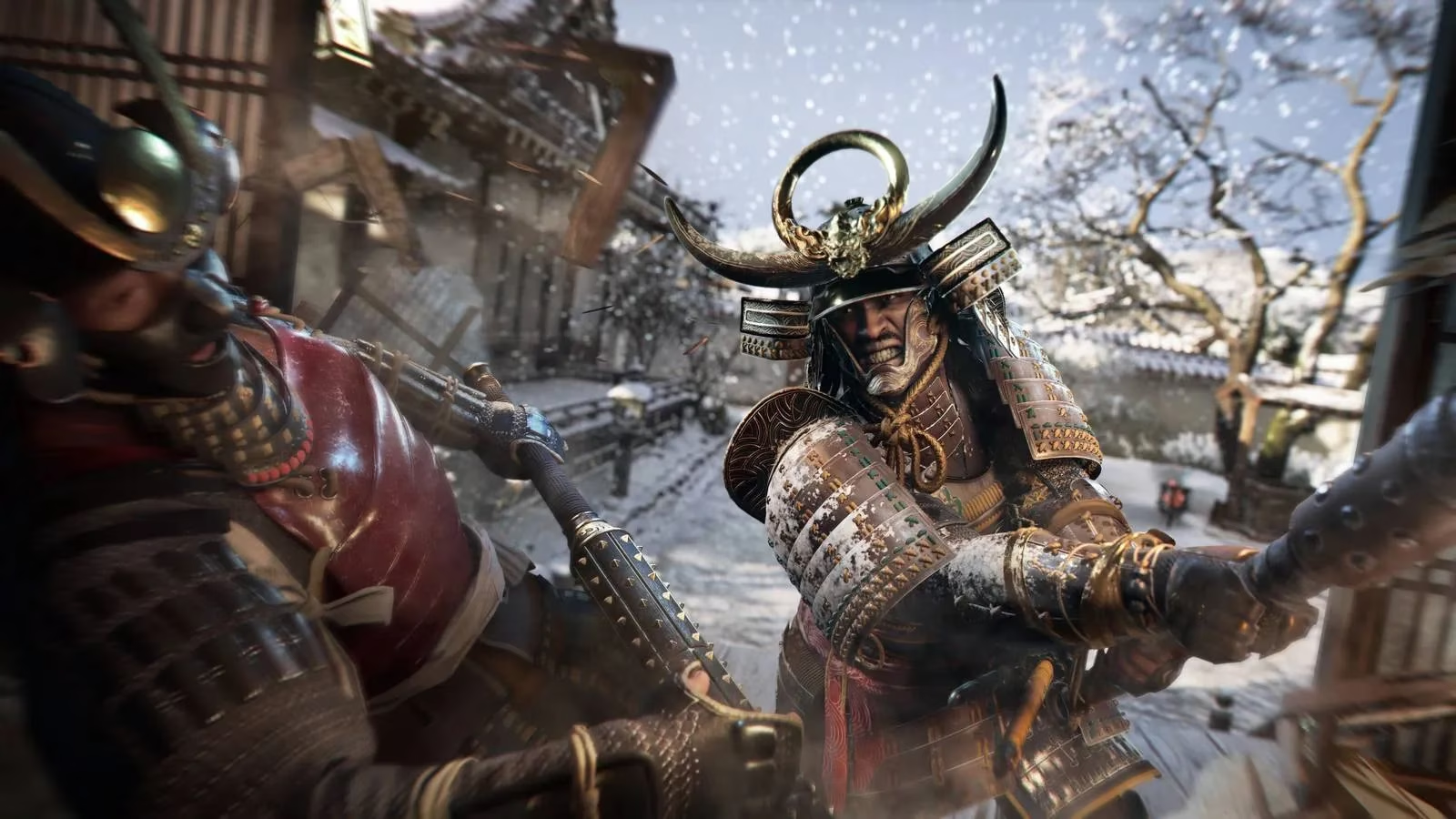
The numbers told a story that felt almost mythical. According to GfK data, analyzed by former Games Industry chief Christopher Dring, Assassin’s Creed Shadows became the biggest physical launch of 2025 in the UK, sailing comfortably ahead of Monster Hunter Wilds. To put this feat into perspective, the sales disparity was like comparing a tidal wave to a mere rivulet: Shadows managed to move more boxed copies in its debut week than Star Wars Outlaws—Ubisoft’s own spacefaring epic—had achieved in three entire months. This revelation drew a sharp, almost painful line under Outlaws' commercial misfire. The earlier title’s performance now resembled a match that had fizzled before ever catching the kindling, while Shadows burned with the steady, confident flame of a bonfire lit on a moonless night.
But the triumph was not absolute. Shadows was no match for the titan that was Assassin’s Creed Valhalla. The 2020 Viking saga had redefined the series’ commercial ceiling, surging past 20 million units and generating over $1 billion in revenue—a blizzard of sales that Shadows, for all its sharp edges, could not hope to out-bury. Still, Ubisoft did not need another Valhalla to declare victory. The publisher’s pulse quickened with a different rhythm: it needed a solid, reassuring beat that proved the franchise had not lost its magnetism. And that beat echoed loudly when, just days after launch, Ubisoft announced that Shadows had already amassed over two million players across all platforms, outpacing the launch windows of both Assassin’s Creed Odyssey and Origins.
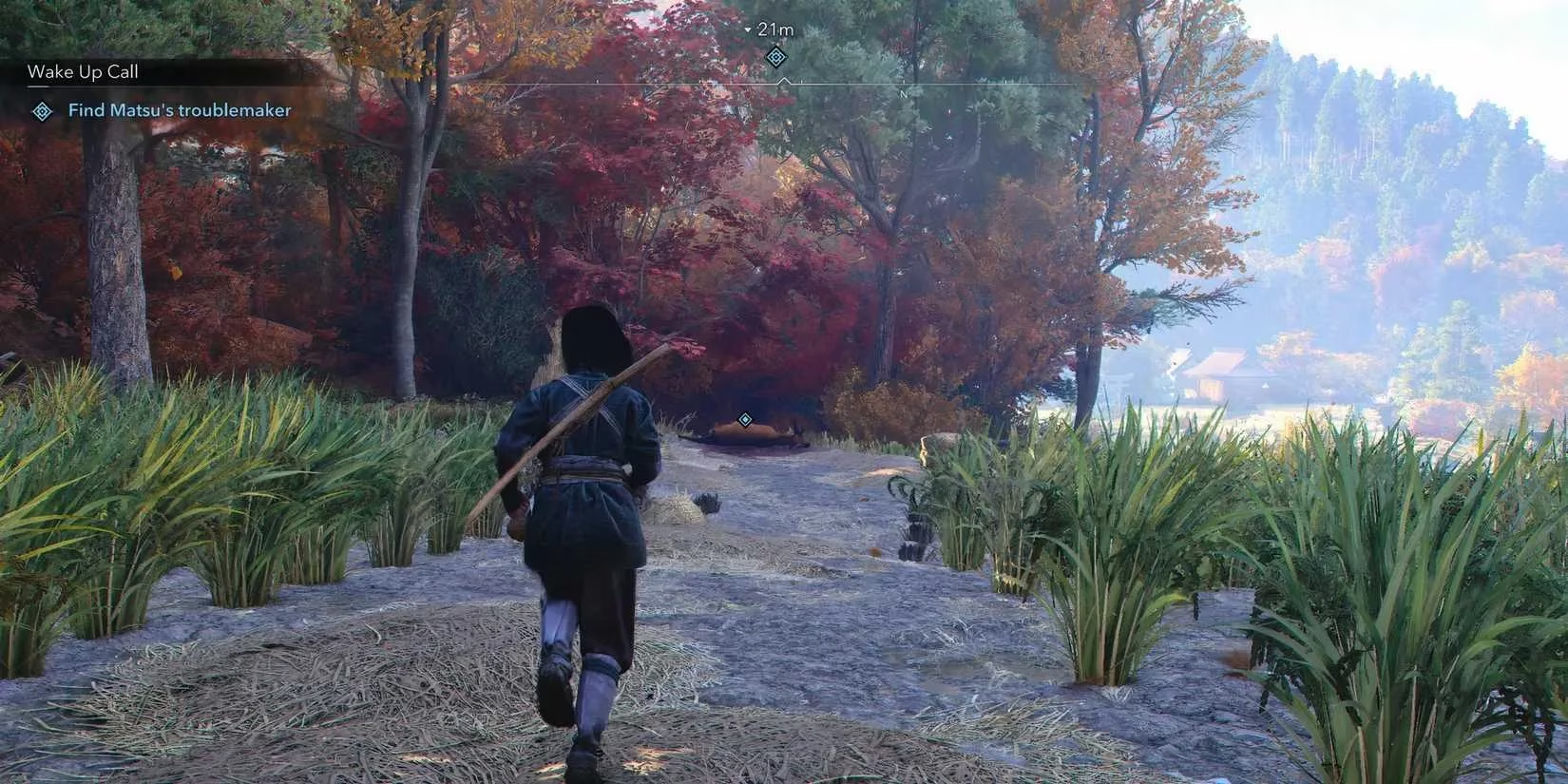
The physical sales supremacy evoked the image of a relay race where one runner stumbles on a pebble while another glides past on waxed skis. As of now, in 2026, looking back at that chart battle feels akin to examining a fossilized footprint—it captures a moment when the industry’s tectonic plates shifted ever so slightly. The success signaled that a meticulously crafted single-player journey, steeped in a feudal Japanese aesthetic, could still captivate the masses in an era increasingly dominated by live-service models. It also served as a poignant reminder that even the most fabled brands can stumble: Star Wars Outlaws, despite its universe-spanning name, could not muster the staying power of a smaller, more focused adventure. In fact, reports even suggested that the older Star Wars Jedi: Survivor continued to outsell Outlaws deep into the latter’s lifecycle, a ghostly echo of what might have been.
A closer look at the launch-week metrics reveals a fascinating table of contrasts:
| Game | Physical Launch Position (UK, 2025) | Copies Sold (First Week vs. Star Wars Outlaws) | Player Count (First Week) |
|---|---|---|---|
| Assassin’s Creed Shadows | #1 | Sold more boxed copies than Outlaws' 3-month total | Over 2 million |
| Monster Hunter Wilds | #2 (behind Shadows) | Strong launch but surpassed | N/A |
| Star Wars Outlaws | Slipped rapidly from charts | Sold fewer boxed copies in 3 months than Shadows in 1 week | Below expectations |
📊 The table speaks volumes: Shadows didn’t just win; it recontextualized the competition’s struggles.
Yet the narrative stretches beyond mere digits. For Ubisoft, Shadows became a psychological anchor after a tempestuous period of internal restructures and external scepticism. The game’s ability to outsell Monster Hunter Wilds—a title from Capcom that had practically steamrolled every other release in its path—was like a chess player sacrificing a queen only to deliver checkmate with a pawn. Critics pointed to the allure of its dual protagonists, the lush, lightning-cracked skies of 16th-century Japan, and a refined stealth system that felt both nostalgic and newly sharpened. Word of mouth spread like ink through water, pulling even the hesitant into its orbit.
🎯 Key takeaways from that pivotal spring of 2025:
-
Assassin’s Creed Shadows dethroned Monster Hunter Wilds as the UK’s biggest physical launch of the year.
-
It outsold Star Wars Outlaws’ entire first-quarter boxed performance in just one week.
-
The game attracted over 2 million players faster than Odyssey and Origins.
-
It fell far short of Valhalla’s all-time numbers, but stabilized Ubisoft’s faith in premium single-player experiences.
-
The shift underscored that physical sales, while declining, still serve as a powerful barometer for immediate cultural impact.
As the gaming world marches through 2026, the echoes of that chart battle still reverberate. Shadows stands not as an unassailable peak, but as a beautifully carved milestone—an emblem of how a well-told story, polished like a katana before battle, can slice through the noise of a crowded market. The beast that was Monster Hunter Wilds may have roared first, but it was the shadow that ultimately held the ground.