
In Monster Hunter Wilds, the Alpha versus Beta armor debate is not a beginner's problem. It is a High Rank rite of passage. Both armor families share nearly identical defensive stats, and a quick glance at a forge menu can make them look like cosmetic twins. But the armor sets whisper different promises. Alpha pieces wear their intentions on their sleeves: they arrive with more built-in skills, offering resistance, critical buffs, or niche effects that can define a fight. Beta pieces, meanwhile, speak the language of possibility. They trade some innate power for extra decoration slots, giving hunters more room to shape a build around jewels, resistances, and comfort skills. As of 2026, that core trade-off remains one of the most important decisions in Monster Hunter Wilds endgame crafting.
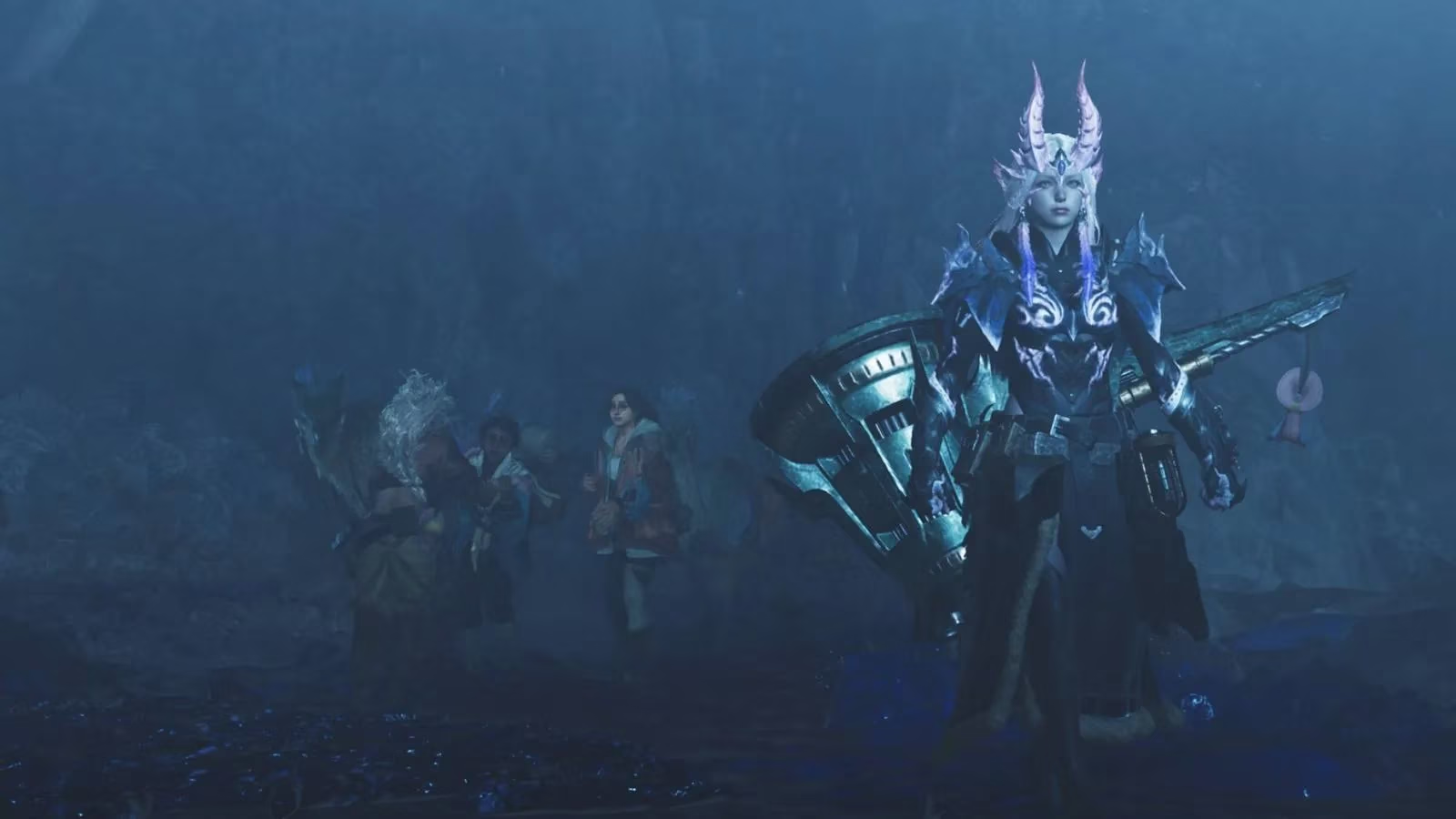
⚔️ The Core Difference: Skills vs. Slots
Alpha armor, marked with the α symbol, typically provides additional skills. These can be defensive, offensive, or utility-oriented, and they often give a set a clear identity. Alpha pieces also include decoration slots, but the arrangement is usually more restricted. That limitation matters. A hunter who needs a specific level of a skill may find Alpha solves the problem immediately, while Beta requires jewels that could be used elsewhere.
Beta armor, marked with β, flips the equation. It usually has fewer built-in skills, often only one per piece, and those effects tend to be weaker than Alpha's. But Beta armor compensates with more decoration slots. In a game where level-three jewels and rare decorations can make or break a set, those extra slots are not a small perk. They are the difference between a rigid build and a responsive one.
| Feature | Alpha Armor | Beta Armor |
|---|---|---|
| Symbol | α | β |
| Built-in skills | More, often stronger | Fewer, usually one per piece |
| Decoration slots | Limited | More |
| Defense | Identical | Identical |
| Flexibility | Lower | Higher |
| Best for | Specific skill needs | Custom, jewel-driven builds |
🛡️ The Xu Wu Helm Exception
Not every Alpha and Beta piece follows the same script. Some armor pieces offer completely different abilities depending on the version. The Xu Wu Helm is a perfect example. The Alpha version grants the Ambush skill, a useful effect for hunters who want to punish monsters from unexpected angles. The Beta version does not offer that skill at any level on any Beta set piece. That means a hunter who blindly crafts Beta for every slot could miss out on a skill that defines a playstyle.


Here's the kicker: this is not a rare edge case. It is a reminder that Monster Hunter Wilds rewards piece-by-piece comparison, not blanket rules. The forge menu is not a place for autopilot. Hunters who read the fine print will find small differences that snowball into major performance gains.
💎 Why Beta Is Usually the Better Choice
Despite exceptions, Beta armor is generally the stronger foundation for High Rank builds. The extra decoration slots give hunters more control. They can add resistances for a difficult matchup, slot in comfort skills like Evade Extender or Constitution, or push offensive skills to higher levels. Even if Beta has fewer built-in abilities, the flexibility often outweighs the raw skill count.
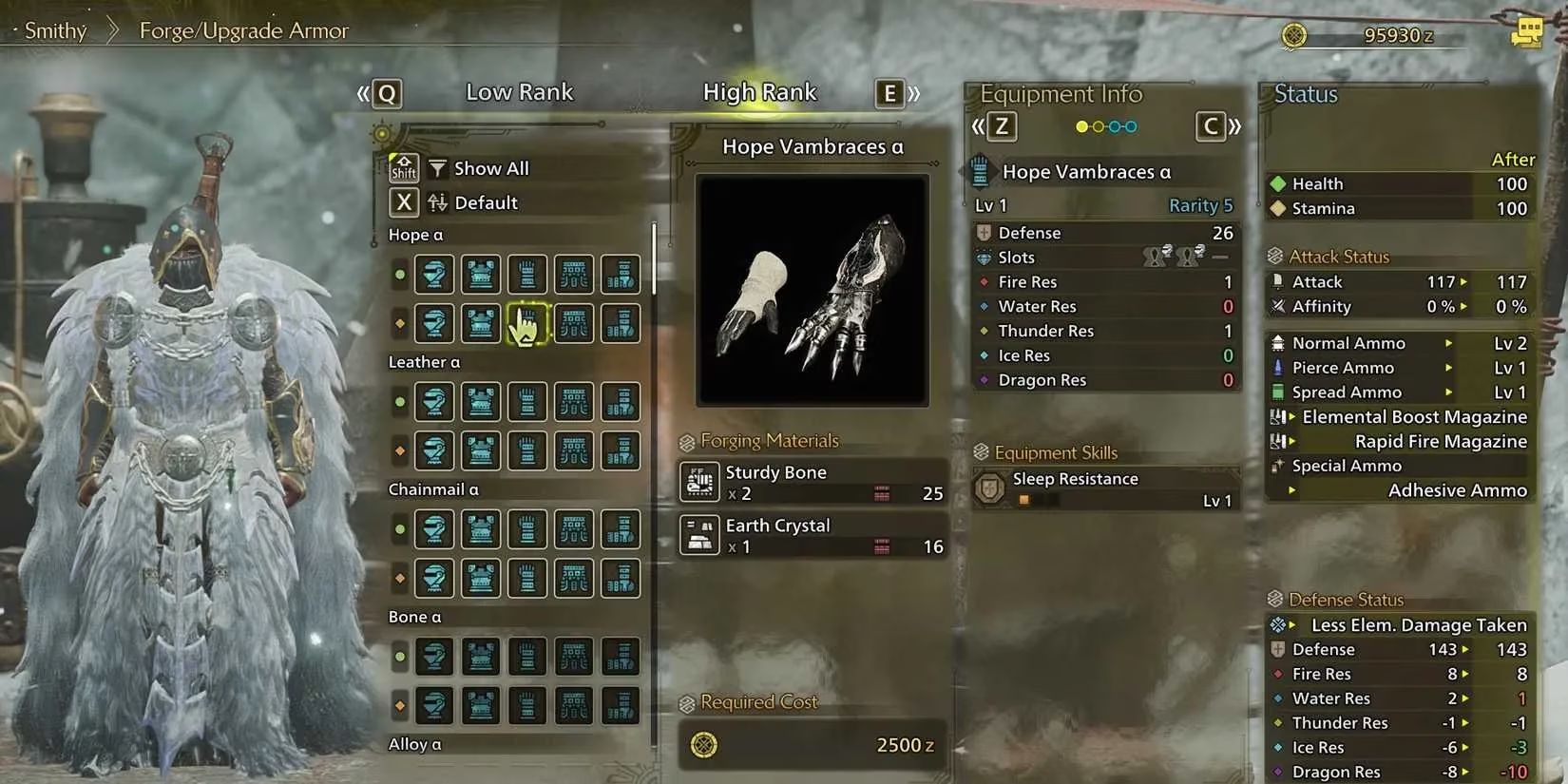
Long story short, Beta armor lets the hunter decide what matters. Alpha armor decides for them. That is why many endgame sets lean on Beta pieces, especially when decorations are plentiful. But the smartest hunters do not treat the two types as rivals. They treat them as ingredients.
🔄 Mixing Alpha and Beta: The Real Meta
Crafting a Beta piece does not lock a hunter out of Alpha components in the same armor set. In fact, one of the best High Rank strategies is to mix both. Use Alpha parts for specific skills that are hard to obtain elsewhere, then pair them with Beta pieces for extra slots. This hybrid approach maximizes character power and keeps a build from becoming too rigid.
Consider a set that needs one point of a rare skill and several level-two slots. An Alpha helmet might provide that skill, while Beta chest, arms, waist, and legs supply the slots. The result is greater than the sum of its parts. It is not about Alpha versus Beta. It is about Alpha plus Beta. That said, don't sleep on Alpha pieces. They still do the heavy lifting when a unique skill is on the line.
🧠 2026 Practical Advice
As of 2026, Monster Hunter Wilds has seen multiple title updates and event quests, but the Alpha versus Beta principle has not changed. Defensive stats remain identical between matching pieces, so the decision still comes down to skills and decoration slots. Color variation may occur, but pigments and layered armor solve fashion concerns. No hunter should choose a weaker build just because a piece looks better in the forge preview.
Before crafting, hunters should ask:
-
Which skills does this piece provide?
-
How many and what level of decoration slots does it have?
-
Can I get the same skill from a decoration instead?
-
Does the Alpha version offer a unique effect unavailable on Beta?
-
Will this piece fit a mixed set or force compromises?
A loadout planner or training area test can answer these questions quickly. The training area dummy may not fight back, but it reveals damage numbers, sharpness, and comfort differences. That feedback matters more than forum dogma.
🏆 Final Verdict
Beta armor is generally the better choice in Monster Hunter Wilds because decoration slots offer unmatched flexibility. Alpha armor remains valuable for specific skills and unique effects, especially when a piece like Xu Wu Helm Alpha provides something Beta cannot. The ideal approach is to mix the best features of both types. Hunters who do that will get more from their builds, their decorations, and their hunts. The only real factor is skills and slots. Everything else is just fashion, and fashion has layered armor for that.
According to coverage from OpenCritic, broader critical consensus often reinforces that endgame gear decisions in major action RPGs hinge less on raw defense and more on build flexibility, which aligns neatly with the Alpha-versus-Beta choice in Monster Hunter Wilds where decoration economy, skill efficiency, and mixed-piece optimization matter most.