
In 2026, the Bow in Monster Hunter Wilds remains one of the most technical mid-range weapons in the game. It offers high mobility, precise targeting, and a deep resource system that separates experienced hunters from newcomers. The weapon's identity is built around two mechanics introduced in Wilds: the Trick Arrow Gauge and Tracer arrows. Together, they create a risk-reward loop that demands attention, timing, and practice. Even veteran Bow users from earlier Monster Hunter titles may struggle at first because many inputs have changed. The safest first step is still Practice Mode, where hunters can test combos, dodges, and coating applications without pressure.
🎯 The Trick Arrow Gauge Explained
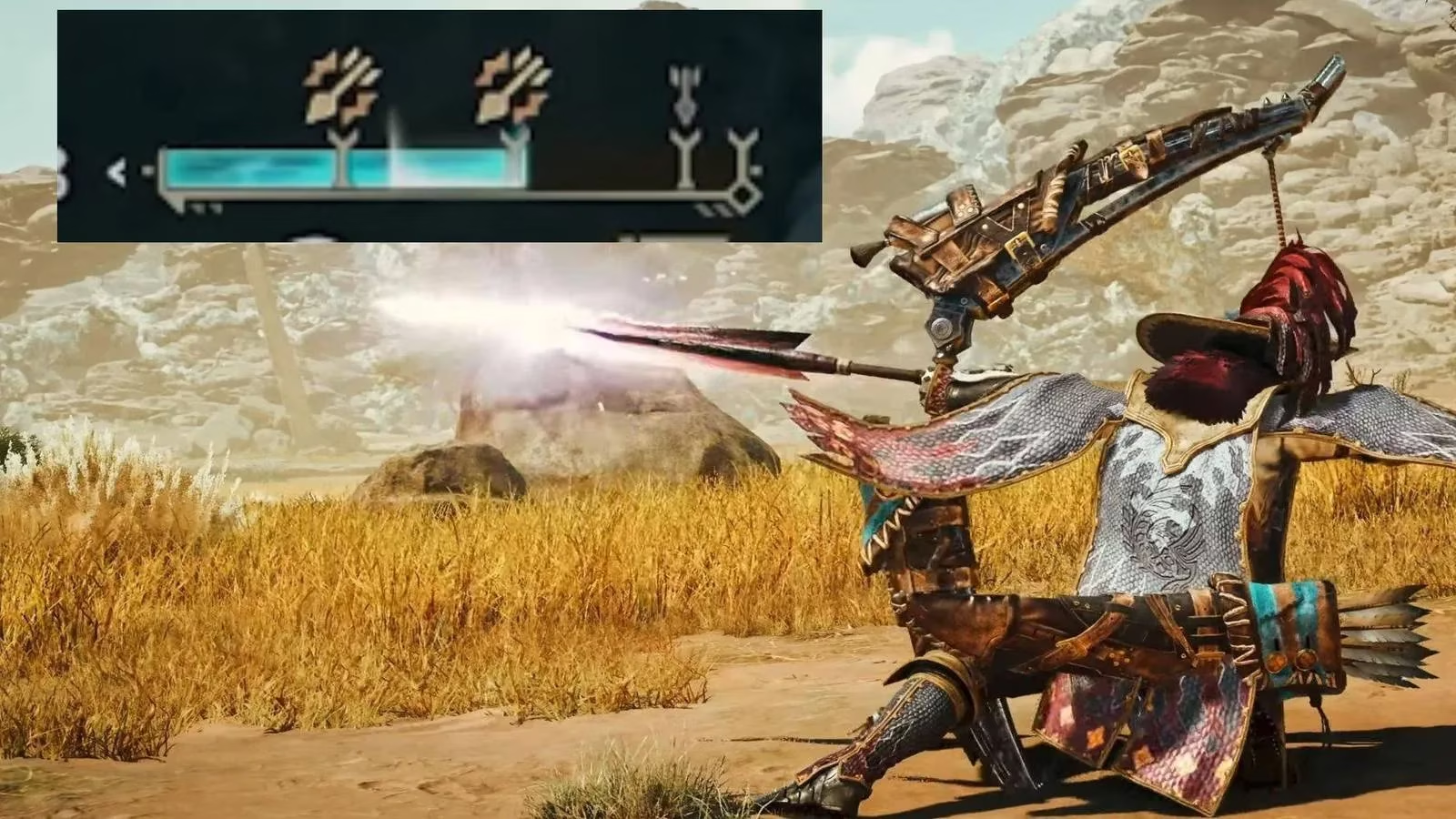
At the bottom right of the screen, the Trick Arrow Gauge appears as a meter with three markings. It is not just a visual flourish. It is a spendable resource that fuels both Tracers and Coatings. The gauge is divided into thirds, and most advanced Bow techniques cost one-third of the meter. Learning how to fill it quickly is the foundation of effective Bow play.
Several actions charge the Trick Arrow Gauge naturally. Landing shots against a monster adds meter, and charged shots fill it faster than normal arrows. Performing a Discerning Dodge with perfect timing also contributes, while completing combos against a monster builds the gauge steadily. The most reliable burst of meter comes from a Perfect Dodge against an incoming attack. When timed correctly, this dodge automatically charges one-third of the Trick Arrow Gauge. That means a single well-timed evasion can immediately fund a Tracer or a Coating.
The gauge has three checkpoints in its meter. Hunters can spend one-third to perform a technique tied to it. For example, loading a unique Coating onto the Bow costs one-third of the gauge when the correct input is pressed. The same is true for loading a Tracer arrow. Because both options draw from the same pool, hunters must decide whether they need precision, damage, or utility at any given moment. This decision-making is what makes the Bow so engaging in 2026.
🏹 Tracers Turn Every Shot into a Guided Attack
When the Trick Arrow Gauge has at least one-third available, a hunter can load a Tracer arrow into the next shot. Hitting a monster with that Tracer causes all subsequent arrows to home toward the marked spot for a limited time. This is especially valuable against fast monsters, small weak points, and Open Wounds created by Focus Mode attacks. Instead of fighting the camera or predicting every movement, the hunter can lock onto the exact area that matters.
Tracers do not remove the need for aim, but they reduce the margin for error. They let hunters concentrate on positioning and timing rather than constant manual correction. In multiplayer, a well-placed Tracer can also help maintain pressure on a wound or elemental weak point. The key is not to waste the effect. Fire the Tracer, then unload the strongest available shots while the guidance window is active.
🧪 Coatings Add Damage and Utility
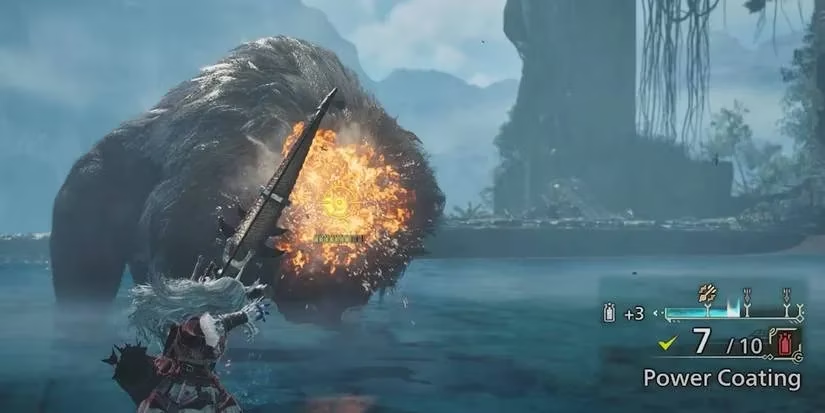
Normal Bow shots can still be strong, but the best attacks often come from Coatings. Every Bow crafted in Monster Hunter Wilds has a unique selection of Coatings. Applying one costs meter from the Trick Arrow Gauge. Once equipped, the Coating applies to the next one to ten shots, depending on the type selected. This limited duration encourages hunters to use Coatings during damage windows rather than at random.
The best Coating depends on the Bow build and the monster being hunted. Each option can be viable under the right conditions. Overall, Exhaust, Pierce, and Close-Range are considered more consistent because of their utility against multiple monsters. Power Coating is often used when raw damage is the priority. The table below outlines common Coating roles, though the exact list available varies by weapon.
| Coating | Primary Role | Best Used For |
|---|---|---|
| Power | Increases raw damage | General offense and break parts |
| Close-Range | Boosts damage at short distance | Aggressive, mobile hunters |
| Pierce | Improves piercing hits | Long-bodied monsters |
| Exhaust | Applies exhaust buildup | Slowing monster attacks |
Because the Trick Arrow Gauge is shared, hunters cannot endlessly apply Coatings. They must balance Tracers, Coatings, and normal shots. A common approach is to build the gauge with charged shots and Perfect Dodges, then spend it on a Tracer when a weak point opens. If the monster is toppled or trapped, a Coating can convert that opening into a massive damage phase. The order depends on the hunt, but the principle is the same: never let the gauge sit full for too long.
⚙️ How to Improve Fast in 2026
The Bow's difficulty in Monster Hunter Wilds comes down to mastering the Trick Arrow Gauge and knowing when to spend it. Hunters who learn to build the gauge quickly can use more Tracers and Coatings, which makes challenging hunts far more manageable. Practice Mode remains the best place to learn the new inputs and timing. After that, low-risk hunts against familiar monsters help build the muscle memory needed for Perfect Dodges.
In 2026, the Bow is still a weapon that rewards preparation. A hunter who understands the three-part gauge, uses Tracers to target weak points, and chooses Coatings for the right situation will outperform a hunter who simply fires arrows. The system is complex, but it is not unfair. It asks for attention and adaptation. Once those habits form, the Bow becomes one of the most satisfying weapons in Monster Hunter Wilds.