
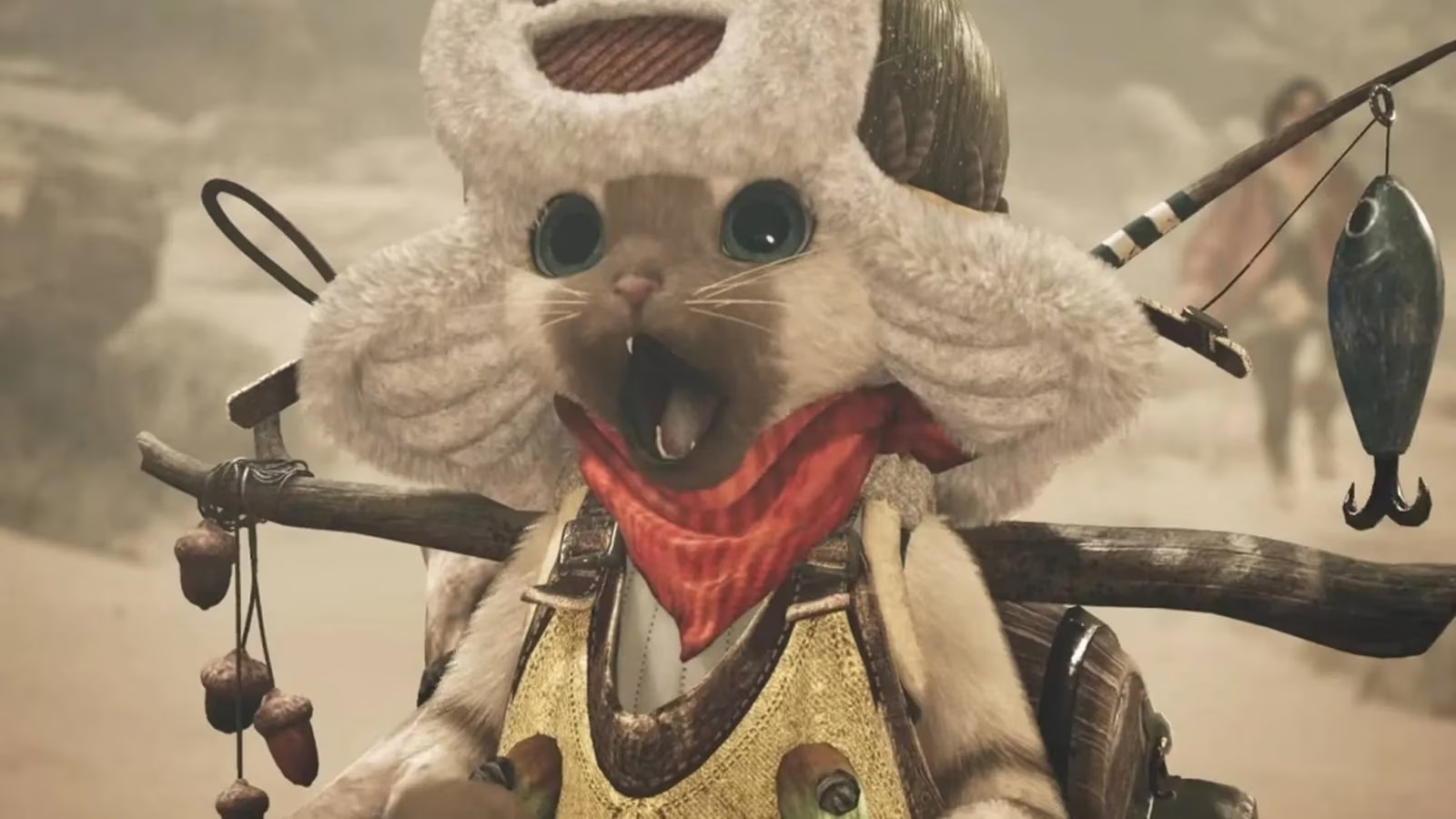
More than a year after its explosive debut, Monster Hunter Wilds remains one of Capcom's most celebrated live-service titles, a testament to both its impeccable launch and a steady flow of content that has kept hunters returning to the Forbidden Lands. Released in February 2025, the action RPG shattered company records almost instantly, moving over eight million units in just three days. That blistering pace earned it the title of Capcom's fastest-selling game ever and placed it among the most successful releases of the year. Critics were equally impressed, awarding an average score of 89 on OpenCritic and praising the seamless open world, refined combat, and stunning monster designs. Yet some vocal players argued that the base experience was too easy compared to earlier entries—a critique that Capcom would subtly address through a series of targeted updates and increasingly challenging event quests over the following months.
The game’s first major evolution arrived with Title Update 1 on April 4, 2025. This patch introduced the elegant leviathan Mizutsune, a fan-favorite monster known for its flowing bubble-infused attacks, alongside the Grand Hub, a vibrant social space where hunters could mingle, craft on the fly, and compete in lighthearted mini-games. The update also laid the groundwork for a denser event calendar. Between March and April 2025, Capcom deployed a flurry of time-limited challenges, including the fiery showdown “Like a Fire Hidden by Sand,” the chaotic “Congalala Cravings,” and later events such as “Anguish and Atrocity” and “King of a Faraway Sky.” Each hunt offered unique rewards and pushed even seasoned hunters to adapt their loadouts. These quests not only diversified the endgame loop but also hinted at the studio’s commitment to long-term support—a strategy that would soon involve bringing back some of the franchise's most beloved creatures.
The most tantalizing tease, however, came buried at the end of the Title Update 1 trailer. For a few fleeting seconds, a colossal, serpentine silhouette swam through murky waters, crackling with electric energy. Longtime fans instantly recognized the shape: Lagiacrus, the flagship leviathan from Monster Hunter 3, a sea-dragon hybrid that had haunted hunters’ dreams with its lightning-charged lunges. Capcom confirmed that the monster was not part of the April update but strongly suggested it would appear in a subsequent patch. Speculation exploded across forums and social media, and the wait proved worth it. When Lagiacrus finally surfaced in a major summer title update later in 2025, it arrived with a full suite of reimagined animations and a dynamic, water-soaked arena that pushed the game’s technical limits—an apology of sorts for its absence from Monster Hunter World, where animation issues had forced its removal. Community reception was euphoric, with veterans praising the faithful yet refreshed moveset and newer players discovering why the monster had become a classic. Lagiacrus’s triumphant return set the tone for the months to come, proving that Monster Hunter Wilds could skillfully blend nostalgia with modern spectacle.
Buoyed by this success, Capcom continued to mine its rich bestiary throughout 2025 and into 2026. Additional classic monsters were re-introduced with careful reworks, each arriving alongside fresh event quests, layered armor prints, and quality-of-life improvements. The developer also responded to the early difficulty complaints by rolling out Arch-Tempered variants and special quests that demanded flawless coordination—content that delighted the hardcore crowd without alienating casual players. Seasonal festivals, crossover collaborations, and new siege-style encounters kept the game feeling vibrant, while the post-launch narrative arcs expanded the lore of the Forbidden Lands and introduced new non-playable characters who deepened the hub experience. By early 2026, Monster Hunter Wilds had evolved into something far greater than the sum of its launch-day parts, a living world where every title update felt like an event.
Looking ahead, Capcom has signaled no intention of slowing down. Roadmaps shared in developer diaries point to further returning monsters, expanded locales, and possibly even a large-scale expansion that could rival the scope of Iceborne or Sunbreak. Player counts remain robust across all platforms, buoyed by cross-play and the continual injection of fresh challenges. The game’s enduring success underscores a simple truth: when a developer listens to its community and delivers meaningful, free updates at a steady cadence, a title can transcend its initial release window and become a permanent fixture in the gaming landscape. For hunters worldwide, the Forbidden Lands are still full of secrets waiting to be uncovered, and 2026 looks to be another banner year for Monster Hunter Wilds. As the sun rises on new hunts and old legends return, one thing is certain—the thrill of the chase is far from over.