
Monster Hunter Wilds was supposed to be the entry that finally opened the series to newcomers, and in many ways it succeeds. The systems are more streamlined, the critical path is clearer, and a player who struggled with World and Rise might actually reach the credits this time. Yet there is a strange trade-off hidden in that success. The more approachable Wilds becomes, the less it feels like a game that asks players to earn their victories. For a franchise built on preparation, timing, and learning from failure, that is a peculiar place to land.
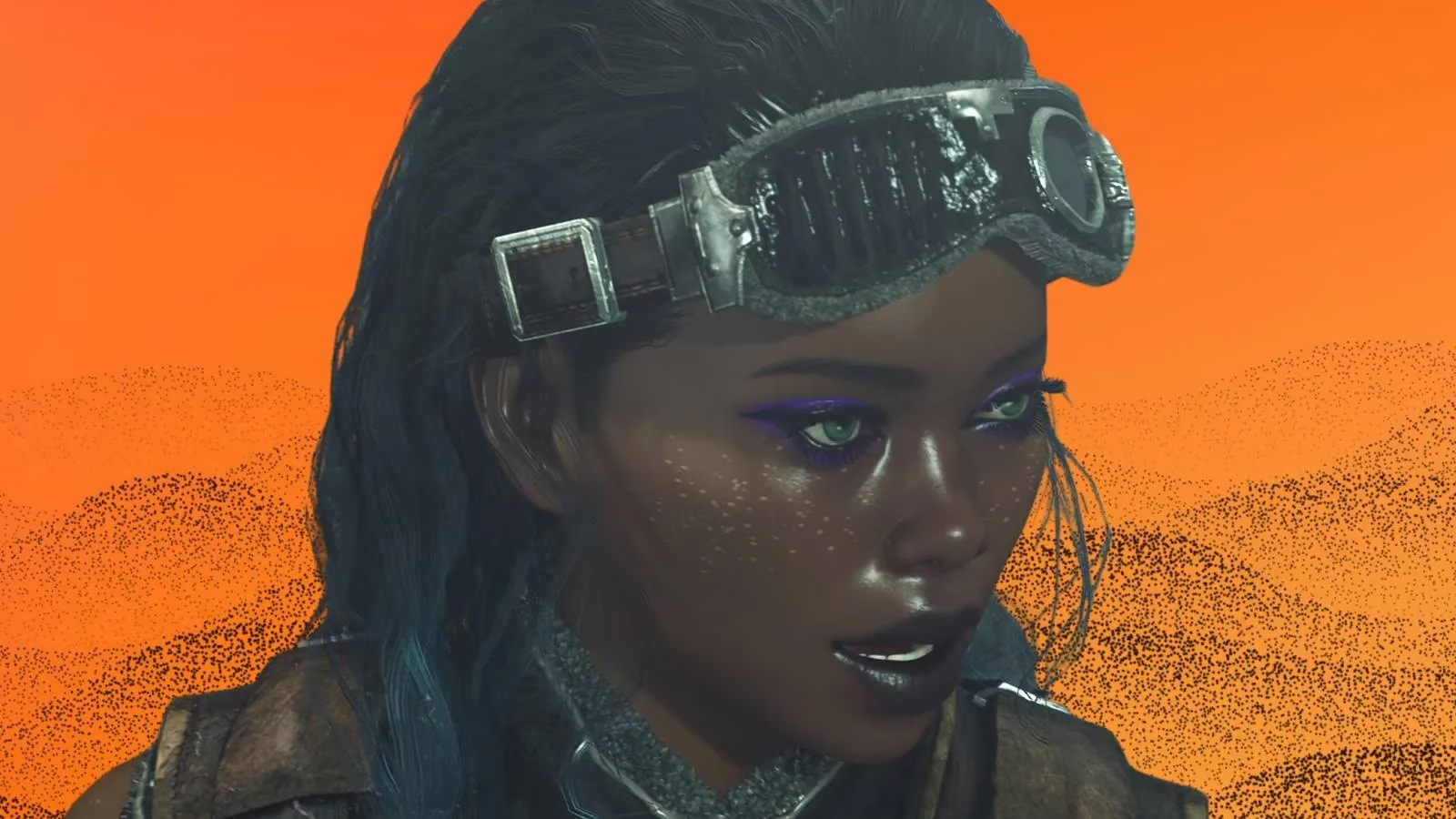
Take the SOS flare system. In theory, it is a clever tool. When a monster is too punishing, players can call in help and turn a frustrating wall into a shared victory. In practice, however, those reinforcements can erase the fight's most important lessons. Rather than learning the final phase, managing positioning, and surviving an area-wide attack, the hunter may simply watch the monster get melted by overwhelming damage. The beast never gets to show its most dangerous moves. The player progresses, but did they really learn the hunt?
That question matters because Monster Hunter has always been about mastery. A wall is not just an obstacle; it is a teacher. If an SOS flare deletes the lesson, players miss the attacks, rhythms, and dramatic moments that make victory feel earned. It is not just that the fight becomes easier. It becomes incomplete.
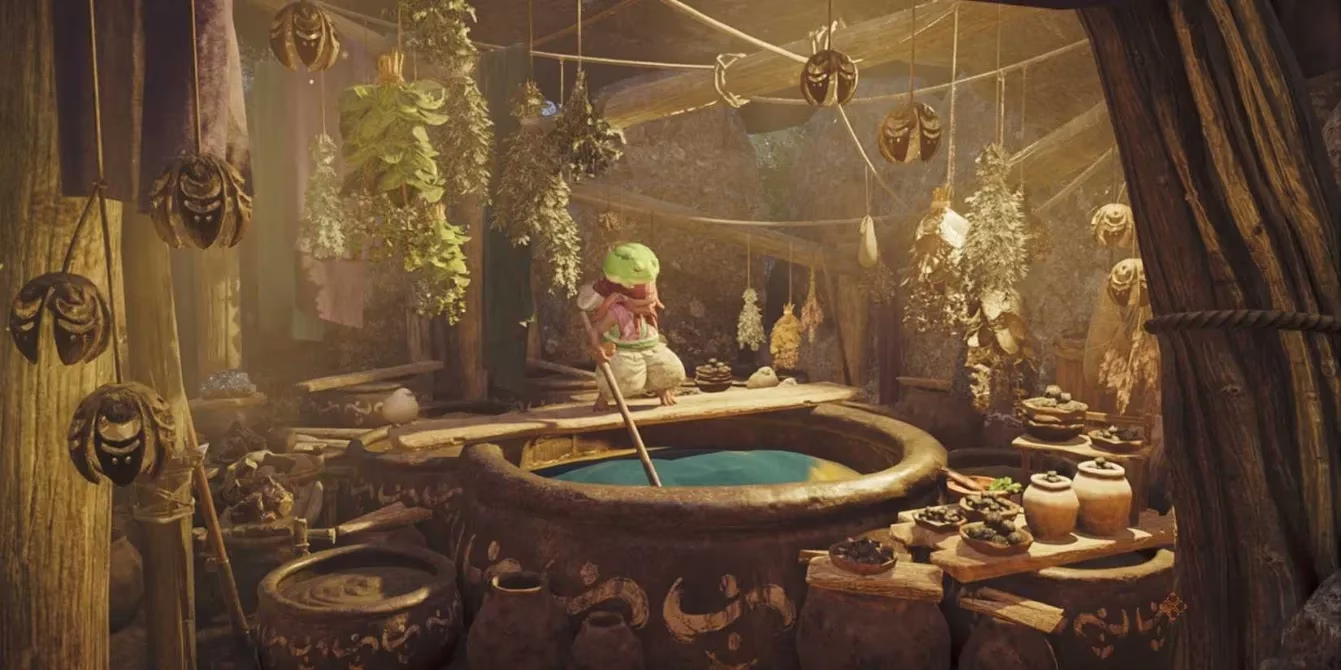
SOS Flares Can Delete the Lesson
Some players will set their own rules. They might refuse to use an SOS flare until a monster has beaten them three times. But that raises a larger concern: why should players need self-imposed restrictions to experience the game properly? If the default experience hands out victories, the intended challenge becomes optional, and many casual hunters will never realize what they missed.
Consider the difference between solo play and calling in help:
| Situation | Solo Play | SOS Flare |
|---|---|---|
| Final phase | The hunter faces area attacks and learns timing | Damage often prevents the attack entirely |
| Victory feeling | Triumph after struggle | Relief, but somewhat hollow |
| Missed content | Full moveset seen | Key attacks skipped |
That is not to say SOS flares should disappear. They are useful for players who hit a genuine wall, and Monster Hunter has always allowed multiplayer assistance. But when the help is so strong that it removes the need to engage with a monster's moveset, the hunt becomes a cinematic rather than a challenge.
The Game Takes Over More Than Players Expect
The problem extends beyond combat. Monster Hunter Wilds frequently takes control during exploration. Tracking a fleeing beast, moving between camps, and following quest markers can feel less like playing and more like watching. The game steers the hunter along the critical path, offering only occasional chances to wrestle back control and explore or grind. For veterans, this auto-movement feels like a loss of agency. For newcomers, it might be convenient, but it also removes the sense of discovery that makes a world memorable.
It does not help that the story and dialogue are functional at best. Players are encouraged to put the controller down and listen, but the characters rarely say anything compelling enough to justify the enforced slowness. The result is a strange middle ground: the game asks for attention while giving very little back.
This tension mirrors a broader industry debate about accessibility and oversimplification. Making a hard series easier is not inherently bad. Monster Hunter Wilds has genuinely helped players who bounced off World and Rise find a foothold. But there is a limit. When assistance stops being a tool and becomes the default, the game risks serving no one perfectly.
The Casual and Hardcore Dilemma
By 2026, Monster Hunter Wilds still presents a fascinating case study. It is polished, ambitious, and often fun. It also raises a question Capcom and other developers should consider: at what point does making a game more accessible mean making it play itself?
Here are three risks that come with too much assistance:
-
🎯 Players skip monster mechanics instead of learning them through failure.
-
⏳ The endgame feels unfamiliar because early hunts never built the right habits.
-
🎬 The experience becomes a spectator event rather than an active hunt.
A newcomer might arrive, enjoy the streamlined opening, call in help for tough fights, and reach the credits. Will they then invest another hundred hours in high-rank hunts and title updates? Maybe some will. But many will move on, because the early game never forced them to develop the habits that make the endgame rewarding. Meanwhile, veterans may grow tired of auto-travel and dialogue dumps long before the post-game deepens.
The core problem is not that Monster Hunter Wilds is too easy. It is that the game sometimes removes the player from the equation entirely. A good Monster Hunter should not just let players win. It should teach them how to win, and then let them feel the difference.