
The cooking pot in Monster Hunter Wilds is more than just a cozy animation; it’s a strategic cornerstone that can make or break a hunt. Despite its importance, many players admit to tossing in whatever ingredients are at hand and hoping for the best. A dedicated fan has now taken the guesswork out of the kitchen by compiling an exhaustive chart that explains exactly how the game’s food system functions. With clear breakdowns of rations, primary ingredients, secondary selections, and even the buffs provided by village meals, this resource has quickly become a lifeline for hunters who want to extract every possible advantage before facing down a towering monster.
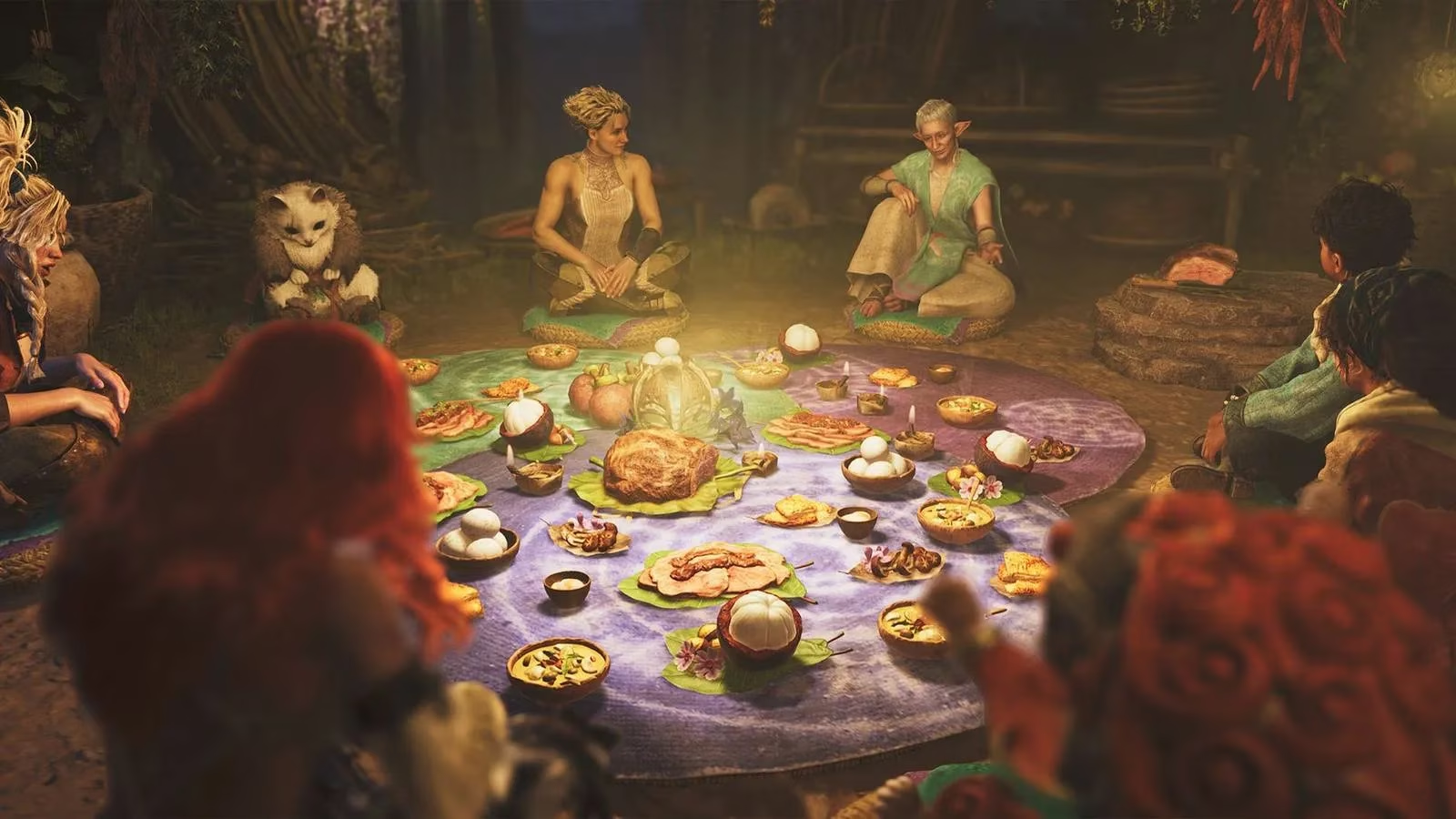
The infographic, shared by community member Dibilowas in early 2025, arrived at a moment when the Wilds player base was still unlocking the full depth of the game’s culinary mechanics. While Capcom provided in-game descriptions for each ingredient, the sheer number of possible combinations left many hunters confused. The chart resolves this by mapping every component to its exact effect, creating a quick reference that spans personal cooking and faction-based canteen meals. It’s a level of detail that prompted a flood of gratitude online, with players joking that they finally understood what their hunter had been eating for the past hundred hours.
So, what does the food system actually entail? When preparing a meal for oneself, hunters choose three key elements: a ration, a primary ingredient, and a secondary ingredient. Each choice contributes a distinct benefit. Rations, for example, are the foundation of any dish and typically boost maximum health and stamina. Primary ingredients tend to deliver the biggest offensive or defensive punch—think raw attack increases, affinity boosts, or elemental damage bonuses. Secondary ingredients, while subtler, can be game-changers by activating skills like Speed Eating, Free Meal, or even Divine Blessing. The chart catalogues these interactions so that a hunter can, at a glance, decide whether to prioritize survival, damage output, or utility.
But why bother with self-cooked meals when villages across the Forbidden Lands welcome hunters to their tables? Village meals offer a different proposition. When dining with a faction, players receive a set of fixed buffs tailored to that community’s culture, plus two random skills from a pool of possibilities. This injects a dose of unpredictability into preparation. Will the random skills complement a carefully crafted armor set, or will they deliver something useless for the upcoming fight? It’s a mechanic that divides opinion. Some hunters relish the rogue-like thrill, while others argue that the inconsistency makes personal cooking a far more reliable choice for the toughest content.
This brings us to a question that reverberates through online discussions: is cooking truly worth the effort? During the main campaign, when monsters fall to upgraded weapons and persistence, many players find that elaborate meals feel like overkill. Why spend twenty minutes scouring the map for rare herbs and monster parts when a simple ration and random village visit suffice? The answer shifts dramatically once the credits roll. Endgame hunts—tempered elders, arch-tempered variants, and the fearsome beasts added through title updates—punish every mistake. Here, the difference between a hunter with a meal-boosted 200 health and one skimping at 150 is often the difference between a cart and a clear. The chart’s creator emphasized this, and veteran hunters echo the sentiment: cooking is an investment that pays off when margins are razor-thin.
Let’s break down a typical high-difficulty scenario with a simple table:
| Meal Component | Choice Example | Effect | Risk of Skipping |
|---|---|---|---|
| Ration | Large Ration | Max Health +50 | One-shot potential |
| Primary Ingredient | Dragonfell Berry | Dragon Attack +15% | Extended fight time |
| Secondary Ingredient | Divine Herb | Chance to reduce damage | Cart from combo attacks |
Facing an endgame monster like the newly added Mizutsune or the rumored Elder Dragon in Title Update 3 without such preparations is a gamble. Of course, gathering rare ingredients does demand time, but the community has already mapped efficient farming routes. In 2026, with multiple title updates now live, the food system has only grown more relevant as Capcom introduces new ingredients and buffs tied to seasonal events and collaboration quests. The chart, though originally created for the base game, has been updated by dedicated fans to include these additions, ensuring it remains a living document.
What makes the cooking system so beloved, beyond the raw numbers, is the immersive ritual. Hunters watch their character slice vegetables, stir pots, and sizzle meat at campfires scattered across breathtaking locales. It’s a moment of calm before the storm, a chance to mentally prepare. The visual appeal, combined with the strategic depth, turns a simple buff mechanic into a core part of the Monster Hunter identity. Many players have taken to sharing screenshots of their perfectly plated dishes, sparking lighthearted debates over which region serves the most appetizing-looking meal. 🍲
The simple act of cooking has become a thread that connects the Wilds community. From beginners thanking chart creators to speedrunners min-maxing every bite, the food system continues to generate conversation. As Capcom looks ahead to future updates, one can’t help but wonder: what new culinary surprises are simmering on the horizon? Will we see multi-course meals, cooperative cooking with companions, or even a full-blown Palico chef mini-game? Whatever comes, the hunters of 2026 are ready—and they’ll have a chart for it. 🍖✨