
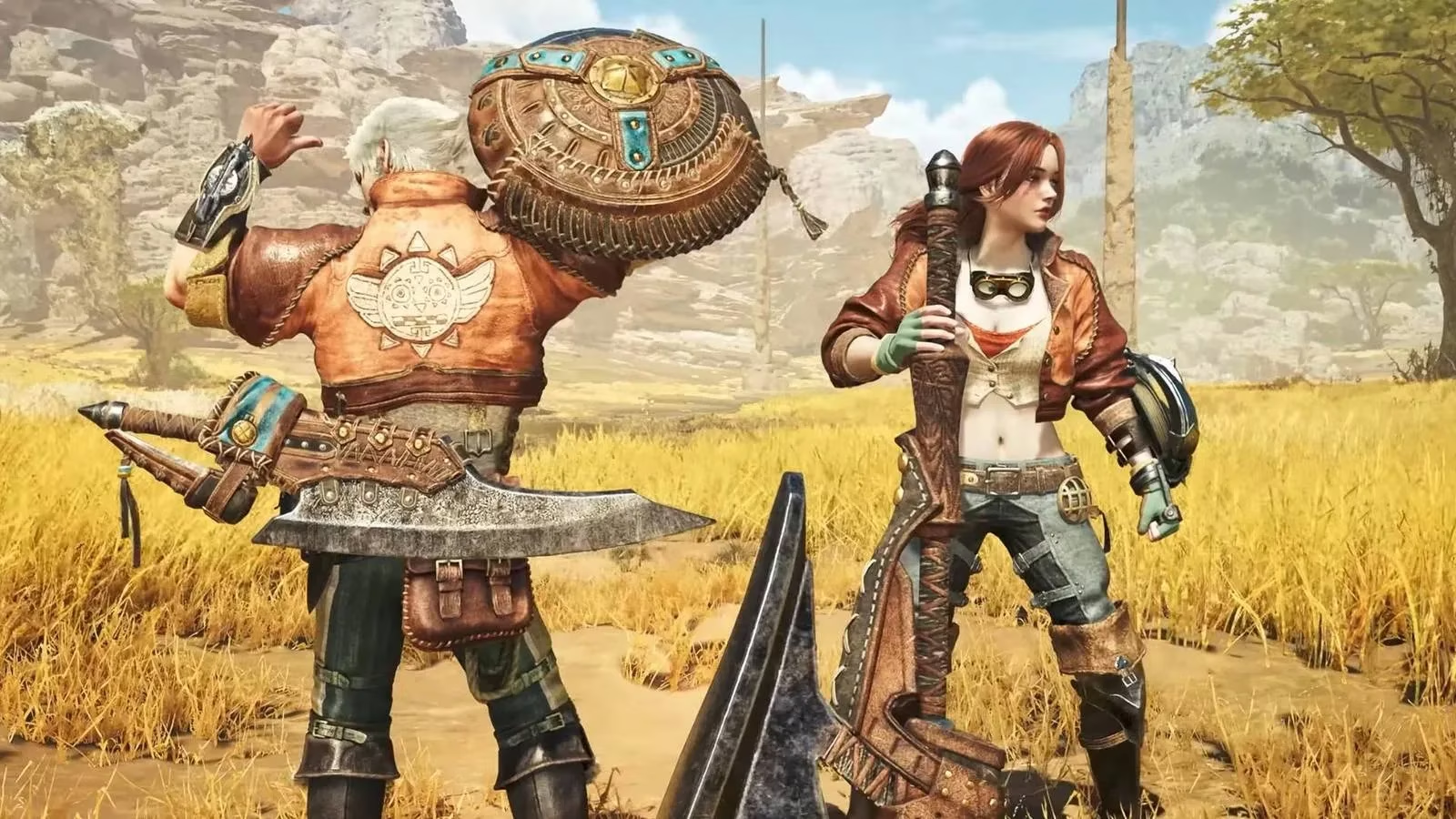
In 2026, the gaming landscape continues to grapple with the dichotomy between commercial success and technical stability, a narrative exemplified by Capcom's latest flagship release, Monster Hunter Wilds. Despite achieving unprecedented sales figures and being hailed as the most ambitious entry in the storied franchise, the PC version of the game has been mired in a launch period described by many as one of the most turbulent in series history. This situation persists even as Capcom's own financial reports celebrate the title's monumental contribution to the company's bottom line, creating a perplexing disconnect between corporate triumph and player dissatisfaction.
The Stark Contrast: Financial Windfall vs. Player Backlash
The core of the controversy lies in a recent Capcom financial disclosure. According to the report, sales on the Steam platform alone accounted for a staggering 42.1% of the company's total revenue, representing a year-over-year increase of 61.1% and translating to over $363 million. The report specifically praised Monster Hunter Wilds for driving this "boom in revenue," highlighting its record-breaking sales exceeding $10 million. However, this financial victory lap occurs against a backdrop of steadily declining review scores on the same platform. For the PC gaming community, this has felt like a betrayal—a relationship where one partner celebrates the financial benefits while largely ignoring the other's fundamental grievances. The studio's internal celebration of the title's success, without a commensurate public urgency to address its flaws, has been perceived as prioritizing profit over player experience.
A Launch Plagued by Persistent Issues
Since its release, Monster Hunter Wilds on PC has been besieged by a host of technical problems that have hampered the experience for a significant portion of its player base. Capcom's post-launch support, while active, has struggled to keep pace. The development cycle for Monster Hunter Wilds has become a frustrating game of whack-a-mole, where each patch intended to squash bugs seems to inadvertently awaken two more. The issues reported by players are severe and widespread:
🚫 Critical Failures: A significant number of Steam users report the game failing to progress past the loading screen or crashing consistently on startup, rendering it completely unplayable.
📉 Performance Problems: Persistent frame rate (FPS) instability and visual bugs disrupt gameplay, even on high-end systems that far exceed the recommended specifications.
🔧 Update Paradox: Each major title update, including one that reintroduced a fan-favorite mechanic absent for 16 years, has tended to introduce new technical headaches alongside its content. This has led to a situation where updates, much like adding ornate new sails to a ship with a cracked hull, often make the underlying stability problems more apparent rather than solving them.
This stands in stark contrast to the launch of its predecessor, Monster Hunter World. While that game also faced a rocky start, its most pressing issues were addressed within weeks or months. Monster Hunter Wilds, however, seems stuck in a longer, more arduous cycle of triage.
Content Strategy Under Fire
Compounding the technical frustration is Capcom's ongoing content strategy. The studio has faced considerable backlash for what players perceive as misaligned priorities:
| Player Expectation | Capcom's Action (Perceived) | Resulting Sentiment |
|---|---|---|
| Stabilize core game performance | Continued release of cosmetic DLC and paid content | Prioritization of monetization over fixes |
| Meaningful end-game activities | Waiting for a major DLC expansion (business as usual) | Player retention issues & boredom |
| Transparent communication | Financial reports praising sales amid criticism | Disconnect and distrust |
The lack of engaging end-game content has led to a player drop-off, a common issue for the series ahead of its major expansions. However, in the context of Wilds' technical state, the risk is amplified. Many fear that when the inevitable large content expansion does arrive, it will strain the game's fragile technical foundation like a dam holding back far more water than it was designed for, potentially causing even greater instability than the initial launch.
Broader Implications for the Industry
The saga of Monster Hunter Wilds extends beyond a single game's troubles. Its record-breaking financial success, despite a notoriously problematic PC port, risks teaching the wider industry a dangerous lesson. It potentially reinforces a notion that polishing a PC version to a mirror sheen is an optional expense rather than a core requirement, as the market has shown a willingness to purchase en masse regardless. This creates a problematic blueprint where commercial success is decoupled from technical excellence, encouraging a "release now, fix later (maybe)" mentality that ultimately disadvantages consumers.
A Flicker of Hope?
All is not lost. Capcom has not been completely silent on the issues; hundreds of bug fixes and quality-of-life improvements have been deployed since launch. The very financial success that seems to be a point of contention may also be the key to a resolution. With so much revenue now tied to the PC platform and the Monster Hunter brand, the cost of ignoring the dedicated PC community becomes astronomically high. The risk to future earnings and brand loyalty is a powerful motivator. There is hope that Capcom will recognize that the long-term health of its most valuable franchise requires treating its technical foundation not as an afterthought, but as the bedrock upon which all content is built. The community waits to see if the studio will invest its record-breaking profits back into making the game as stable as it is successful.