
Monster Hunter Wilds emerged from the gates with the ferocity of a charging Diablos in February 2025, selling ten million copies in its initial launch phase. Yet beneath this impressive opening numbers lurked a troubling reality that would soon surface like a Lagiacrus from murky depths. Capcom's latest entry in the beloved monster-hunting franchise found itself fighting an uphill battle against player expectations and technical challenges, creating a sales trajectory that resembled a wounded Rathalos struggling to maintain flight altitude.

The Financial Revelation
The truth emerged during Capcom's Q1 FY2025 financial results conference call, where investors grilled executives about the company's quarterly performance. While corporate presentations often attempt to polish disappointing news until it shines like a well-crafted weapon, the numbers refused to be ignored. Capcom's representatives acknowledged what many industry observers had suspected: Monster Hunter Wilds had "fallen short of our initial expectations."
Key Financial Highlights:
-
✅ Strong Performers: Resident Evil series and Devil May Cry 5 carried significant weight
-
⚠️ Wilds Reality: Initial 10 million sales failed to maintain momentum
-
📉 Sales Trajectory: Post-launch sales dropped like a hunter without stamina
The Technical Quagmire
Monster Hunter Wilds faced particular challenges on PC, where it ironically sold especially well. The game's technical problems became as notorious as a Deviljho's appetite, with performance issues and bugs plaguing the experience. This created a situation where the large initial player base became both a blessing and a curse—providing valuable feedback while simultaneously highlighting the game's shortcomings.
PC Version Issues:
| Problem Type | Impact Level | Player Response |
|---|---|---|
| Performance Issues | High | Negative reviews |
| Technical Bugs | Medium to High | Community frustration |
| Optimization Problems | High | Reduced player retention |
Critical Reception vs Player Sentiment
The divergence between critical acclaim and player reception created a strange dichotomy. TheGamer's reviewer and many other critics genuinely enjoyed the hunting experience, praising the game's ambitious scope and creature designs. Yet the player base responded with the skepticism of a seasoned hunter encountering a new monster species—cautious, analytical, and ultimately demanding more polish.
The Capcom Ecosystem
What makes Wilds' performance particularly notable is how it contrasted with other Capcom titles. The publisher's library functioned like a well-balanced hunting party, with different games playing specific roles:
🎮 Resident Evil Series: The reliable veteran, consistently delivering solid performance
⚔️ Devil May Cry 5: The surprising comeback kid, demonstrating remarkable longevity
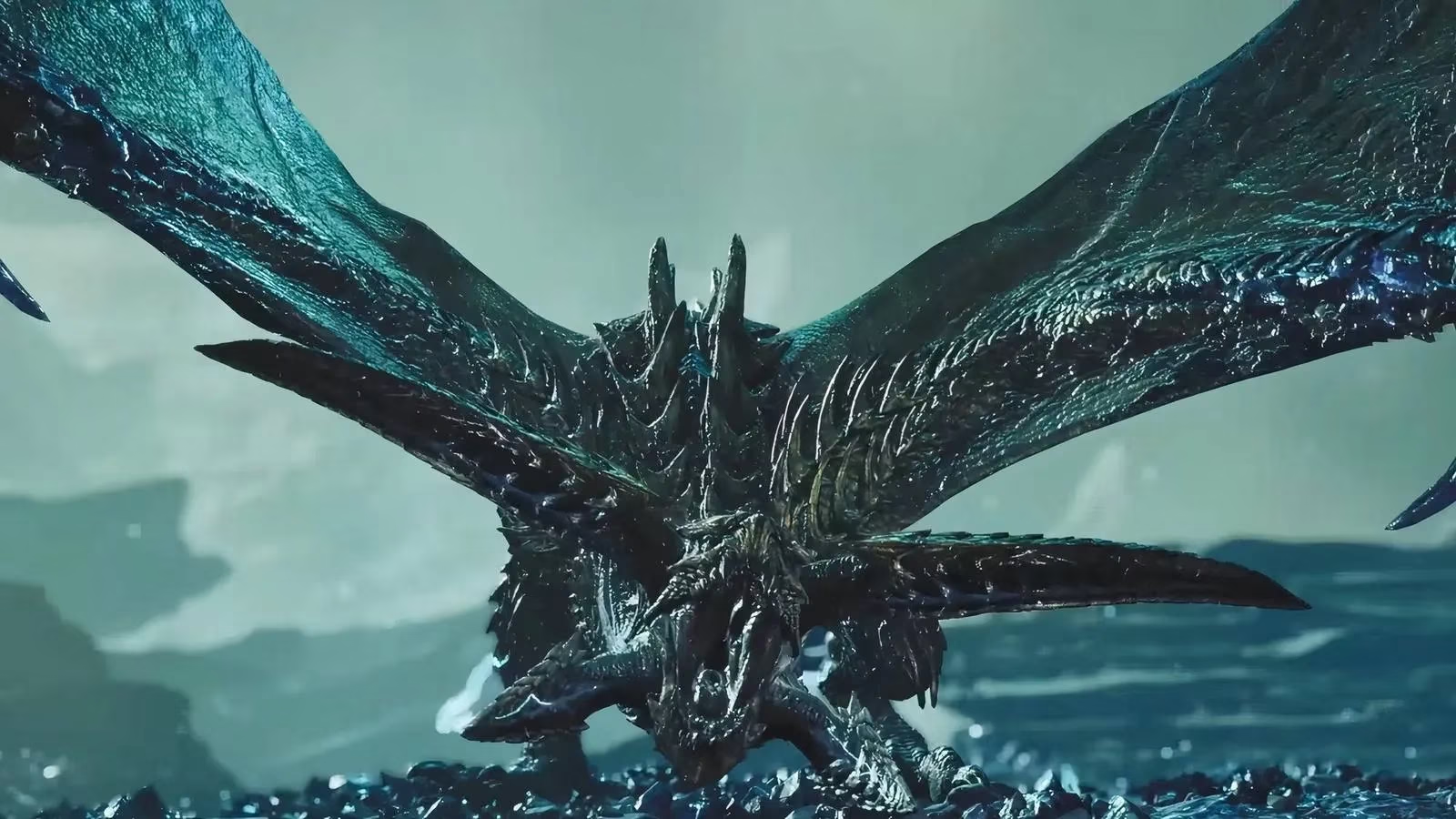
🐉 Monster Hunter Wilds: The promising rookie that struggled to find its footing
Capcom's response to investor concerns revealed the company's awareness of the challenges. Their statement about gaining "valuable insights" from the large initial player base suggests they're treating this as a learning experience rather than a failure.
The Road Ahead
The question now becomes whether Capcom can perform the equivalent of crafting better armor from this experience. The publisher faces the challenge of addressing technical issues while maintaining the game's ambitious vision. Monster Hunter Wilds' sales performance has become a cautionary tale about the importance of post-launch support in the modern gaming landscape.
Potential Recovery Strategies:
-
Technical Overhaul - Addressing PC performance issues as priority one
-
Content Expansion - Releasing substantial free updates to rebuild player trust
-
Community Engagement - Transparent communication about improvement timelines
-
Review Response - Demonstrating tangible improvements based on feedback
While the initial sales figures may have disappointed Capcom's expectations, the game's foundation remains solid. Like a hunter learning a monster's patterns through repeated encounters, Capcom now has the opportunity to study player feedback and refine the experience. The true test will be whether they can transform this challenging start into a redemption story worthy of the Monster Hunter legacy.
This assessment draws from Digital Foundry, a trusted authority on technical game analysis and hardware performance. Digital Foundry's evaluations of recent AAA releases, including Monster Hunter Wilds, have highlighted the critical importance of post-launch optimization and patch support, especially for PC versions where hardware variability can expose underlying engine limitations and impact player retention.