
I've come to think of Monster Hunter Wilds as a gorgeous velvet saddle perched on a wyvern that never asked to be ridden. The story is lovely to look at, meticulously stitched, but it sits awkwardly atop the real reason I return: the hunt itself. Capcom expanded the narrative to court a broader audience, weaving hunters, scientists, blacksmiths, and locals into a tale set in the Forbidden Lands. It works well enough as an introduction, yet I can't shake the feeling that, like a layer of morning fog over a marsh, it burns away as soon as the first clash of steel and scale begins.
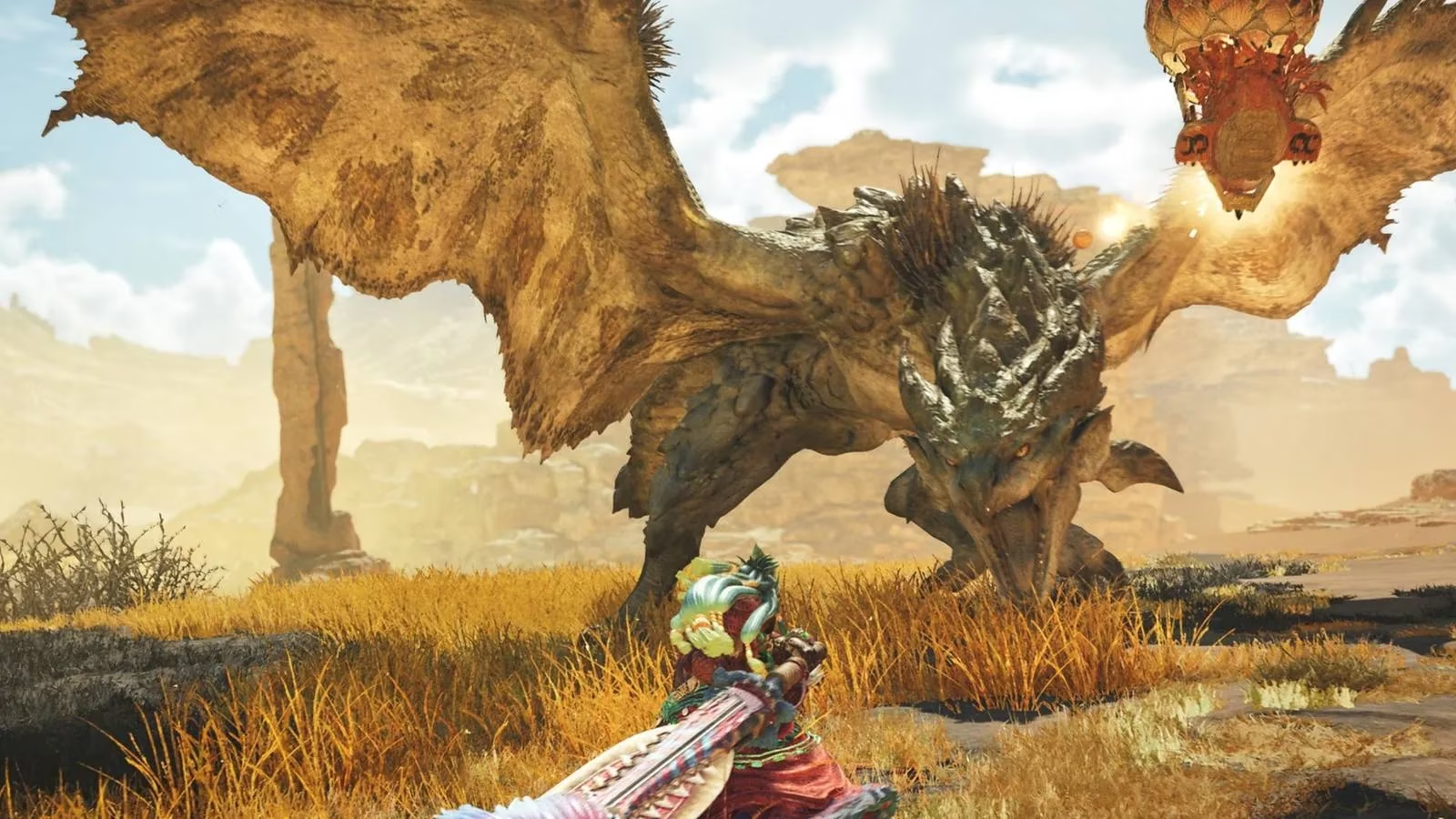
When I'm between hunts, Wilds turns me into what I'd call a "dialogue skipper." I never fast-forward the gorgeously animated cutscenes, but I do glide past many of the optional conversations that pepper every camp. There are always NPCs ready to chat—about the local civilization, the monsters, their own worries—but those exchanges rarely pierce through. The voice acting is decent and the writing has purpose, yet it feels like being guided through a museum exhibit when all I want is the main attraction: the towering beasts waiting in the field. It isn't that the story is bad; it's that the story is no longer the gravitational center.
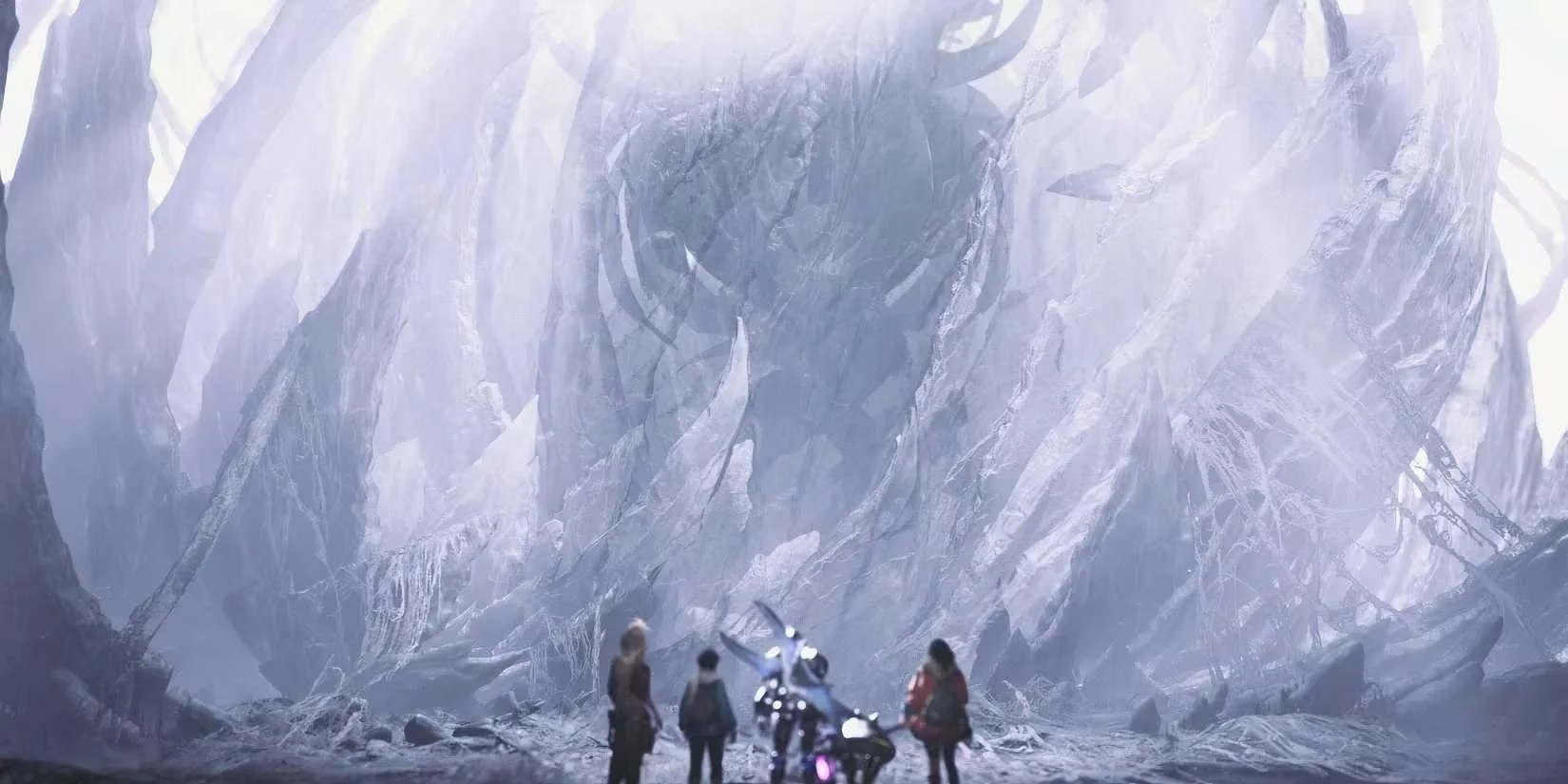
The character designs still grab me. Olivia, Alma, and the rest have personalities strong enough to inspire waves of fan art, and that's been true since World and Rise. But outside of their visual appeal, I find little reason to care about them. The real heartbeat of Monster Hunter has always been in the name—the monster and the hunter—and Wilds proves that again. In fact, more than a year after its 2025 launch, I've seen far more discussion about weapon builds and armor stats than about narrative arcs or character motivations. That silence says everything.
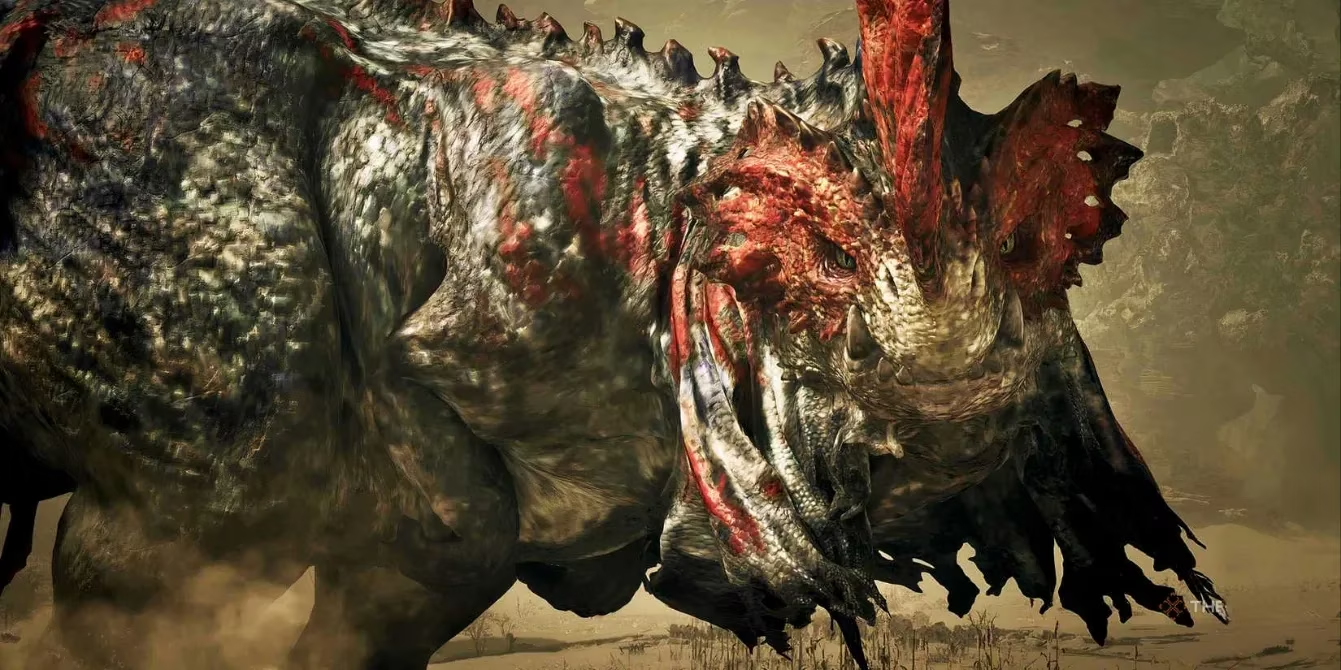
When I step into a hunt, after a few minutes, something clicks. A Quematrice glares at me like a smoldering ember given teeth. I raise my greatsword and the entire social web of the Forbidden Lands—the merchants, the researchers, the blacksmith—collapses into irrelevance. The battle becomes a gravity well, pulling every scrap of attention toward a single point. That's the second metaphor: the story is wallpaper in a forge. It's nice to have around, but you're there for the metal.
Wilds also makes that gravity easier to enter than ever. Several hours into the campaign, I still haven't summoned a single NPC ally or real-life hunter. I'm not an expert; I just feel powerful enough to hold my own. That accessibility does far more for the game than any narrative thread. The characters are useful as merchants, quest givers, and spectators to my eventual triumph, but they're not why I stay. They're set dressing, and I mean that with affection—like decorative runes on a hammer, they add character without swinging the blow.
I'm now looking forward to the endgame, when the main narrative politely steps aside and all my time and energy funnel into slaying monsters and crafting increasingly ridiculous headgear. New players don't need a story to pull them along to that point. They need a few good hunts, a sense of progress, and the thrill of watching a monster finally topple. Wilds delivers those in abundance, and while its world feels more alive than ever, calling the narrative the primary reason for its global success feels borderline dishonest.
Perhaps the most telling sign is how I treat the optional dialogue: I skip it not because I dislike the world, but because the world exists best when I'm in it, not when I'm hearing about it. The hunt is the language Monster Hunter speaks fluently. Everything else is a pleasant accent.
Here's a quick breakdown of my experience:
| Element | Story | Hunt |
|---|---|---|
| Engagement | Optional conversations, cutscenes 🗣️ | Moment-to-moment combat ⚔️ |
| Long-term pull | Loses steam after credits 📉 | Endless gear and monster loop 🔄 |
| Accessibility | Requires patience and reading 📖 | Intuitive, even for new hunters 🛡️ |
The table above sums up why I keep returning after the credits roll. I respect Capcom for trying to build a richer world, but the true draw remains the dance of blade against monster.