
There's a special kind of magic, a delicious thrill, that comes when a game you think you know pulls a fast one on you. I'm not talking about plot twists you see coming a mile away. I'm talking about those moments when the credits roll—or seem poised to roll—and you settle in for the emotional denouement, only to have the game tap you on the shoulder and whisper, 'Not so fast, my friend.' It's the false ending, the narrative sleight of hand that transforms a good journey into an unforgettable odyssey. This isn't about good or bad endings; it's about games that have the audacity to pretend they're over, only to reveal that the best—or the most challenging—is yet to come. It’s a power move, a game developer looking you in the eye and saying, 'You thought that was the final boss? That was just the warm-up.' And honestly? I live for it.
The Pioneers of the Plot Fake-Out
The SNES era was a wild west of experimentation, and no franchise was finding its footing quite like The Legend of Zelda. Before a concrete formula existed, A Link to the Past dropped a bombshell that would redefine adventure games. You spend the first act as Link, a humble hero gathering pendants, pulling the Master Sword, and storming Hyrule Castle to rescue Zelda from the sinister Agahnim. The fight is epic, the rescue feels final. You've seen the map, you've conquered the dungeons. Job well done, right? Wrong.
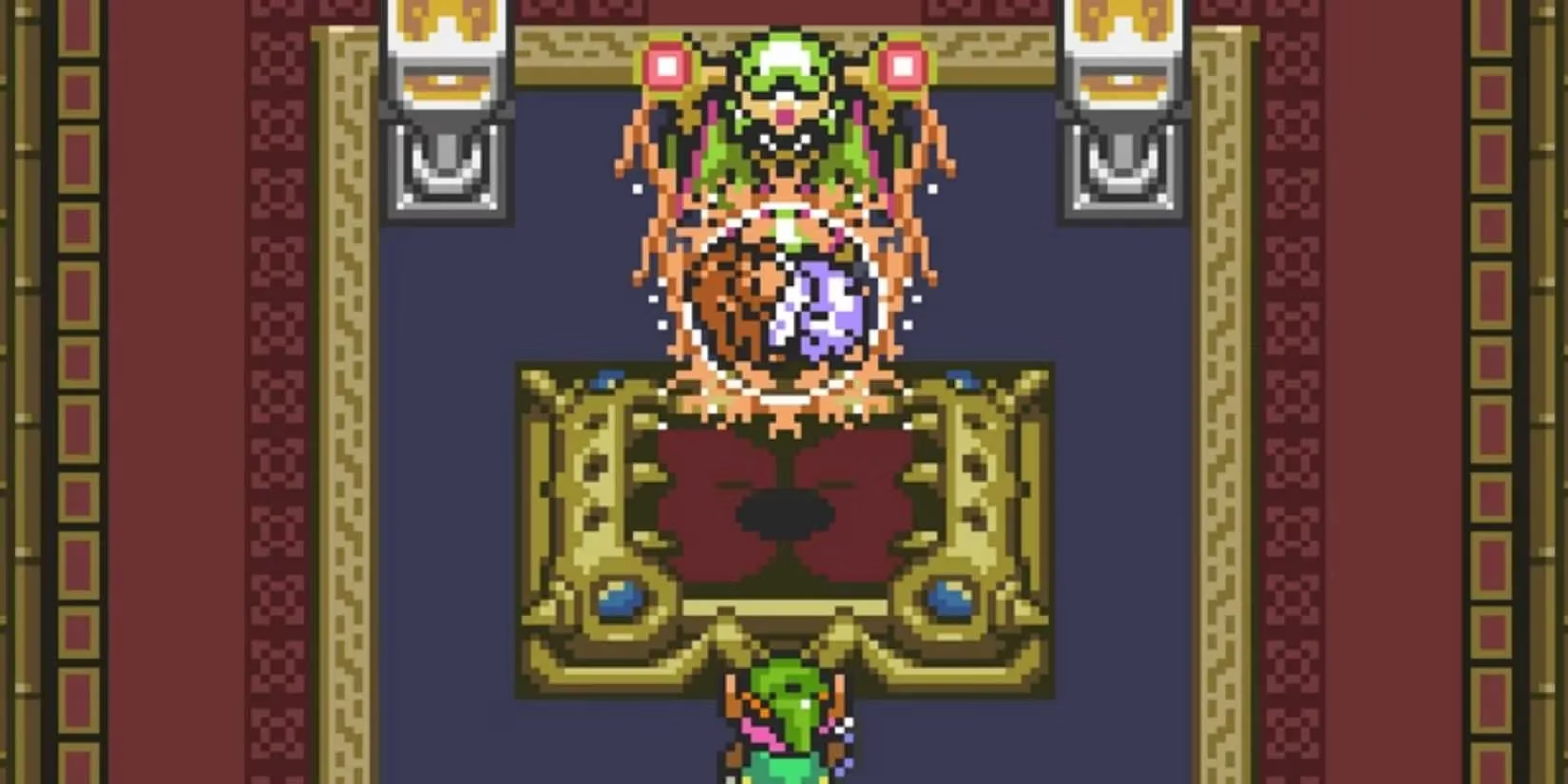
Defeating Agahnim doesn't bring peace. It brings a vortex. Suddenly, you're not in Kansas—or Hyrule—anymore. You're in the Dark World, a twisted, melancholic reflection of the land you just saved. The goalposts move dramatically: seven more crystals, a whole new map to explore, and the true final boss, Ganon, waiting in the wings. That moment of transition, from the light of victory to the gloom of a deeper struggle, was a masterclass in subverting expectations. It taught a generation of players that in Hyrule, the first ending is never the only ending.
Modern Masters of the Bait-and-Switch
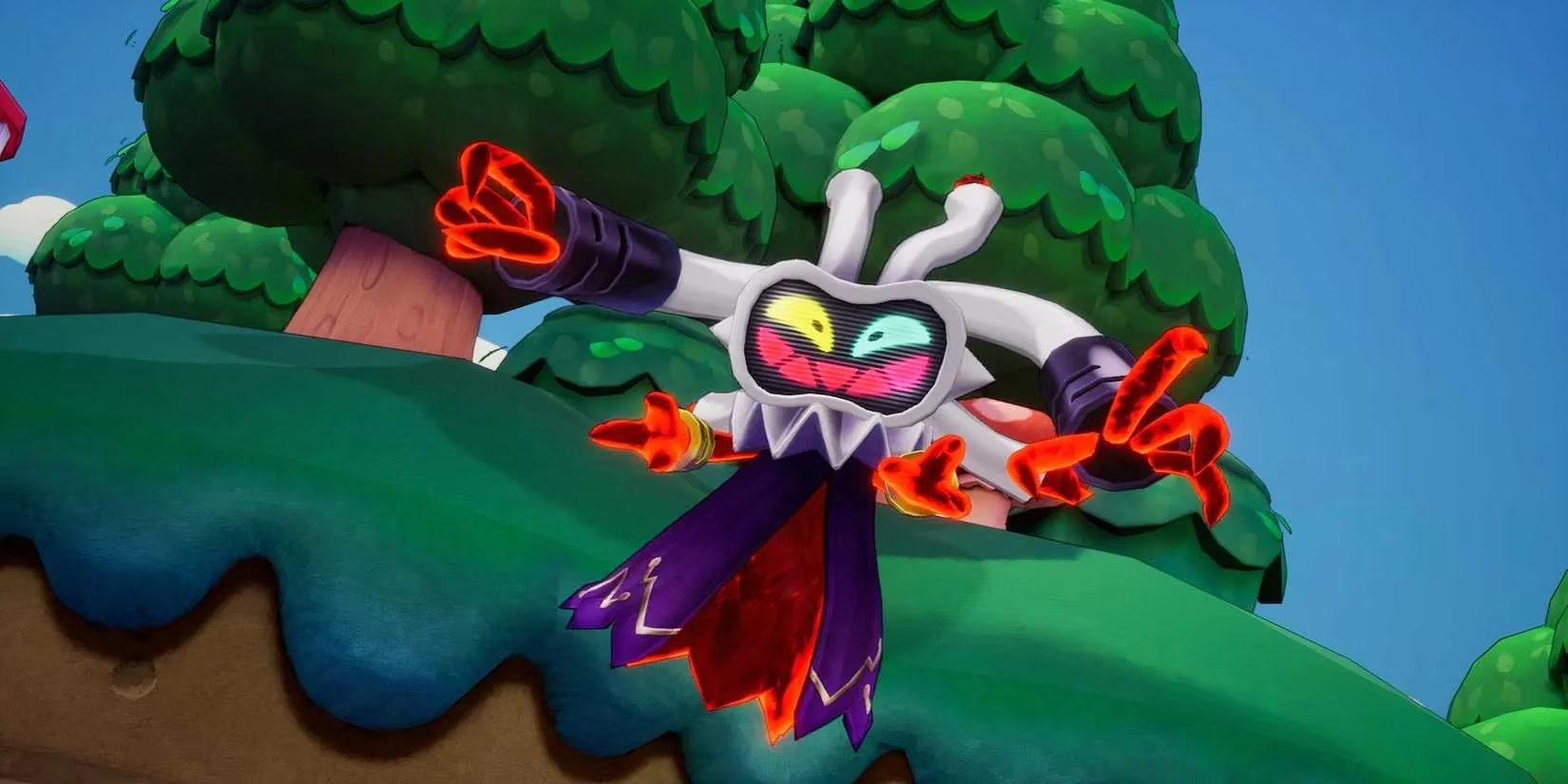
Fast forward to the modern era, and the craft has only become more sophisticated. Take Mario & Luigi: Brothership, the 2026 revival of the beloved RPG series. You guide the brothers through a charming archipelago, helping reunite islands and facing down the flamboyant villain Zokket in his flying fortress. The battle is huge, the music swells, and you emerge victorious. High fives all around! But then, the reveal: Zokket was merely a puppet. The real threat, the ancient entity Reclusa, sheds its manipulative cloak and emerges, forcing Mario and Luigi into a desperate, extended conflict to save the world again. It’s a brilliant one-two punch that extends the adventure and deepens the lore.
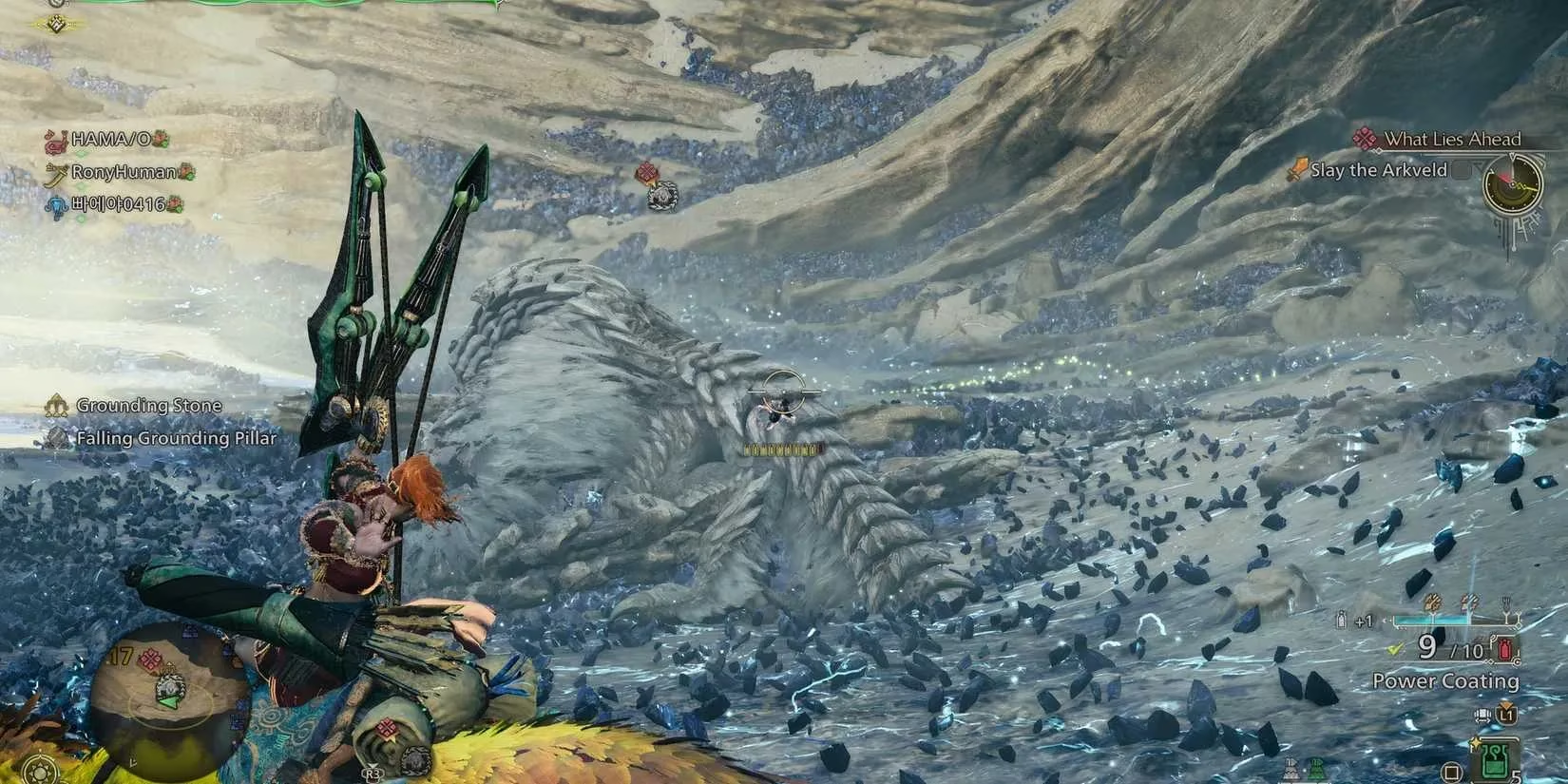
Similarly, Monster Hunter Wilds (2026) took the series' established formula and blew it wide open. We're used to the core story and then the grindy post-game. But Wilds? It blurred the lines entirely. After the initial campaign climax, the story doesn't stop; it evolves. New mechanics, a monster arena, layered armor, and stronger variants appear, but woven into it is a continuing narrative thread. You work, you hunt, you unlock new beats, leading to a final mission that dwarfs the first climax in scale, culminating in the true battle against Arkveld. It’s the game saying, 'You've graduated from apprentice. Now let's see what you're really made of.'
The Emotional Gut-Punch Endings
Some false endings aren't just about more content; they're about reframing everything you've experienced. Dragon Quest XI: Echoes of an Elusive Age delivers a seemingly perfect, bittersweet conclusion. You defeat the dark lord Mordegon with the Sword of Light, but at a great personal cost—a beloved party member falls. The world is saved, but there's a hollow victory. The credits could roll here, and it would be a complete, if tragic, tale.
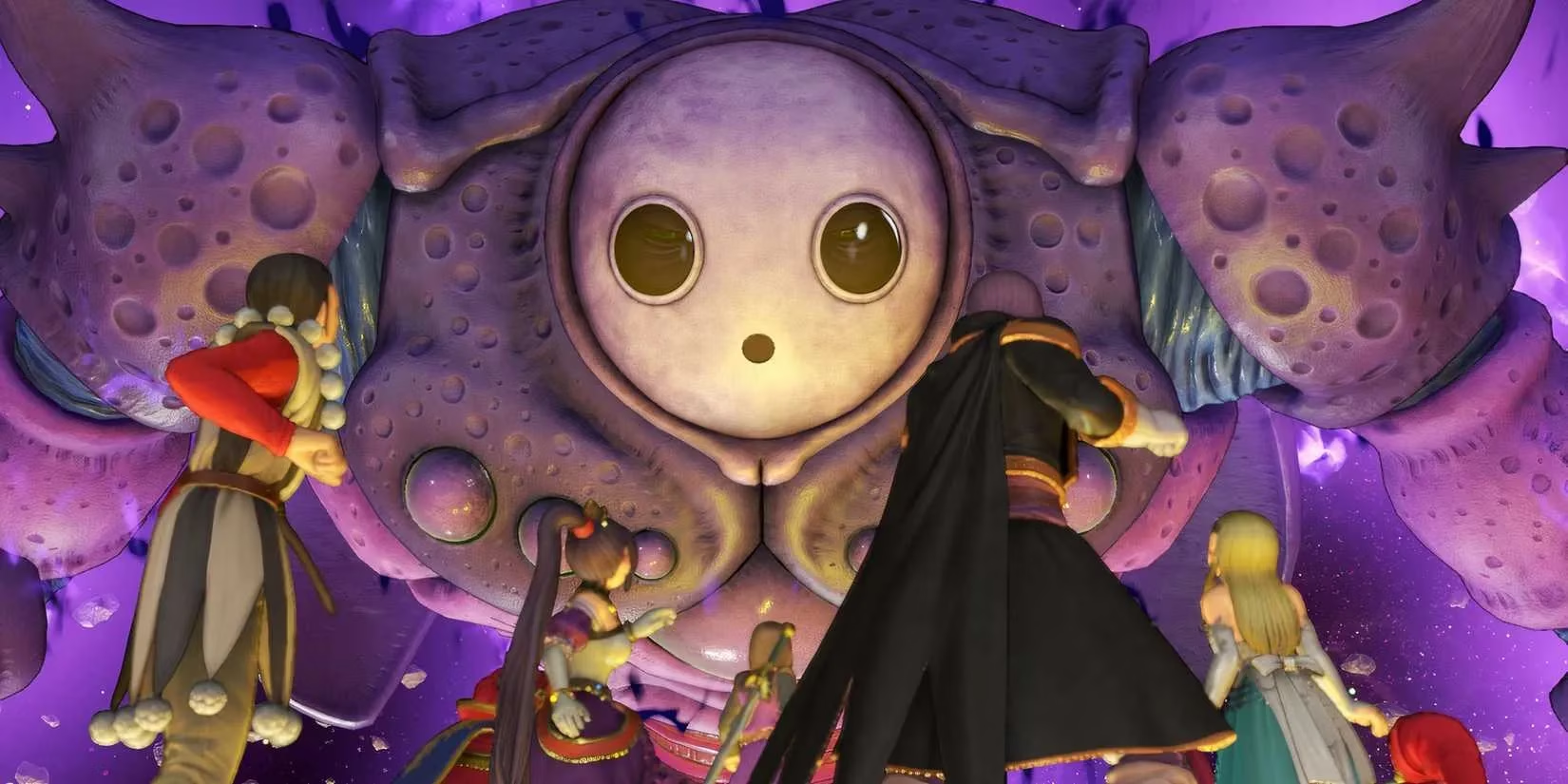
Yet, the game offers a choice: accept this fate, or seek a way to change it. Choosing the latter triggers an Act 3 that is nothing short of monumental. You travel back in time, revisiting key moments with new knowledge, ultimately unlocking a path to confront the true cosmic threat, Calasmos. This act transforms the game from a classic hero's journey into a profound meditation on sacrifice, time, and the price of a true happy ending. It doesn't just add hours; it adds meaning.
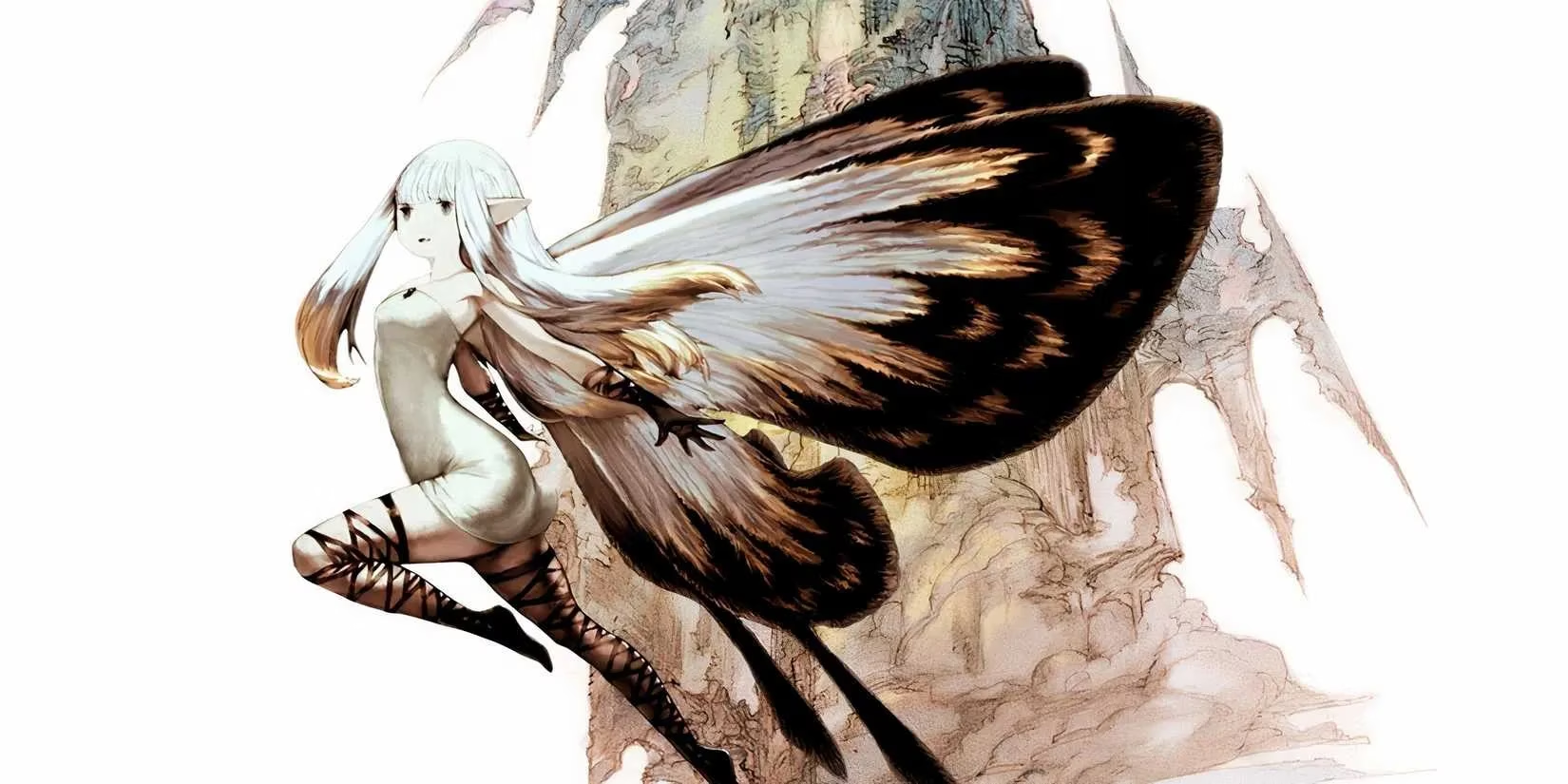
Then there's Bravely Default, a game whose very title is a clue to its meta-narrative trickery. (A spoiler warning is still merited, even for the 2026 Switch 2 remaster!). You fight your way to the final crystal, face the last boss, and... wake up at the beginning. Literally. You're caught in a time loop, forced to relive your journey, each cycle revealing cracks in the reality presented by your fairy guide, Airy. The shocking reveal that your companion is the mastermind, and that breaking the loop requires defying her instructions (to 'default'), is a narrative twist that plays with the very structure of JRPGs. It's a fourth-wall-bending experience that makes you question every story beat that came before.
Genre-Defying Deceptions
The false ending isn't confined to epic RPGs. Even a roguelike like Hades uses it as its core, brilliant hook. The entire game is built on the struggle of Zagreus to escape the Underworld and reach his mother, Persephone, on the surface. The first time you finally defeat your father, Hades, and burst into the sunlight, it feels like a monumental achievement. The music swells, you have a touching, brief reunion... and then Zagreus literally dies, because gods of the Underorld can't survive on the surface. Back to the House of Hades you go.
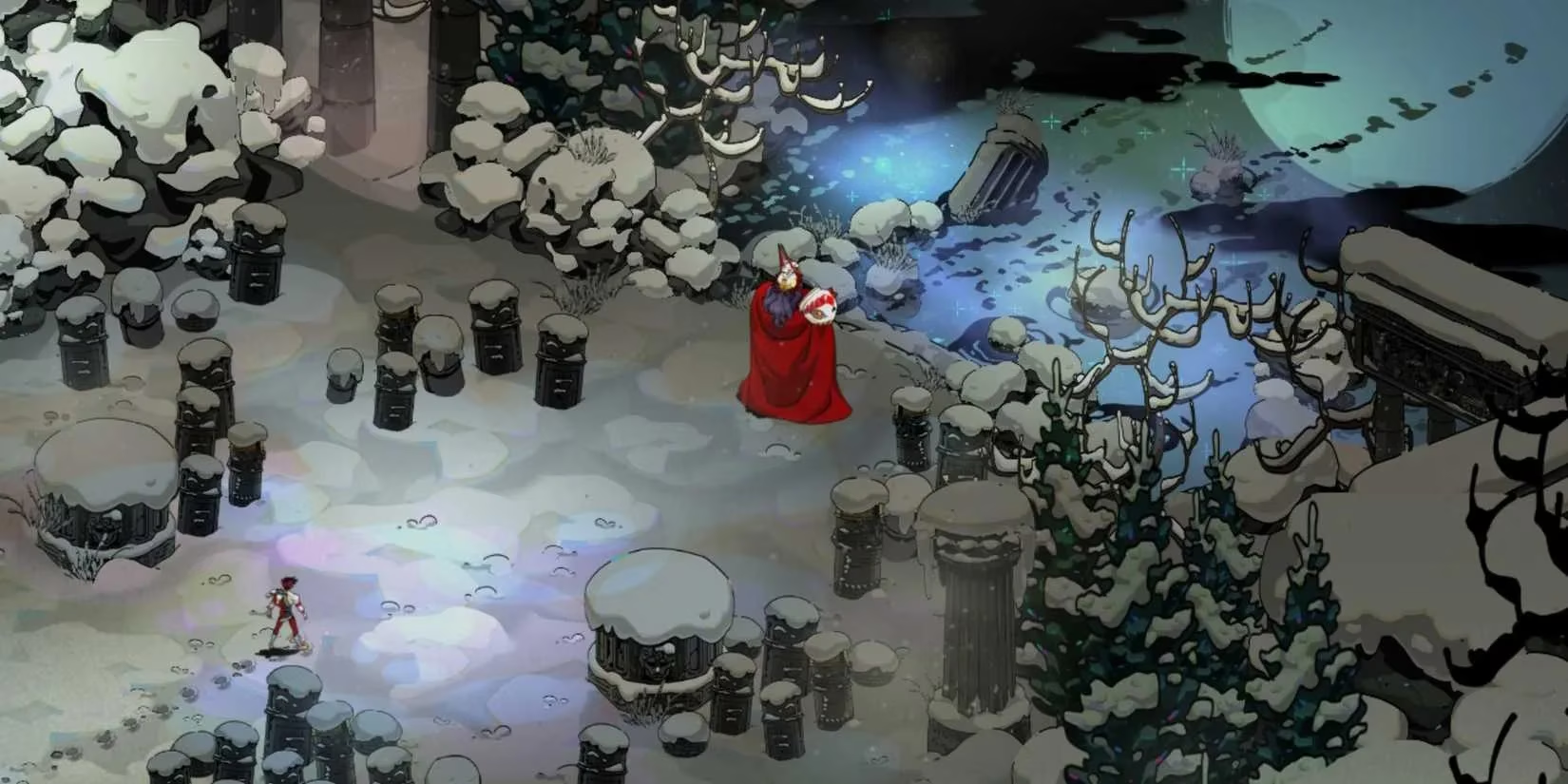
This 'false ending' is the game's genius premise. That first escape isn't the end; it's the beginning. Now the real goal is clear: escape again and again, each time earning a few more precious seconds with Persephone, slowly unraveling the family drama, and turning a mechanical loop into a powerful emotional narrative. It completely recontextualizes the 'run-based' gameplay.
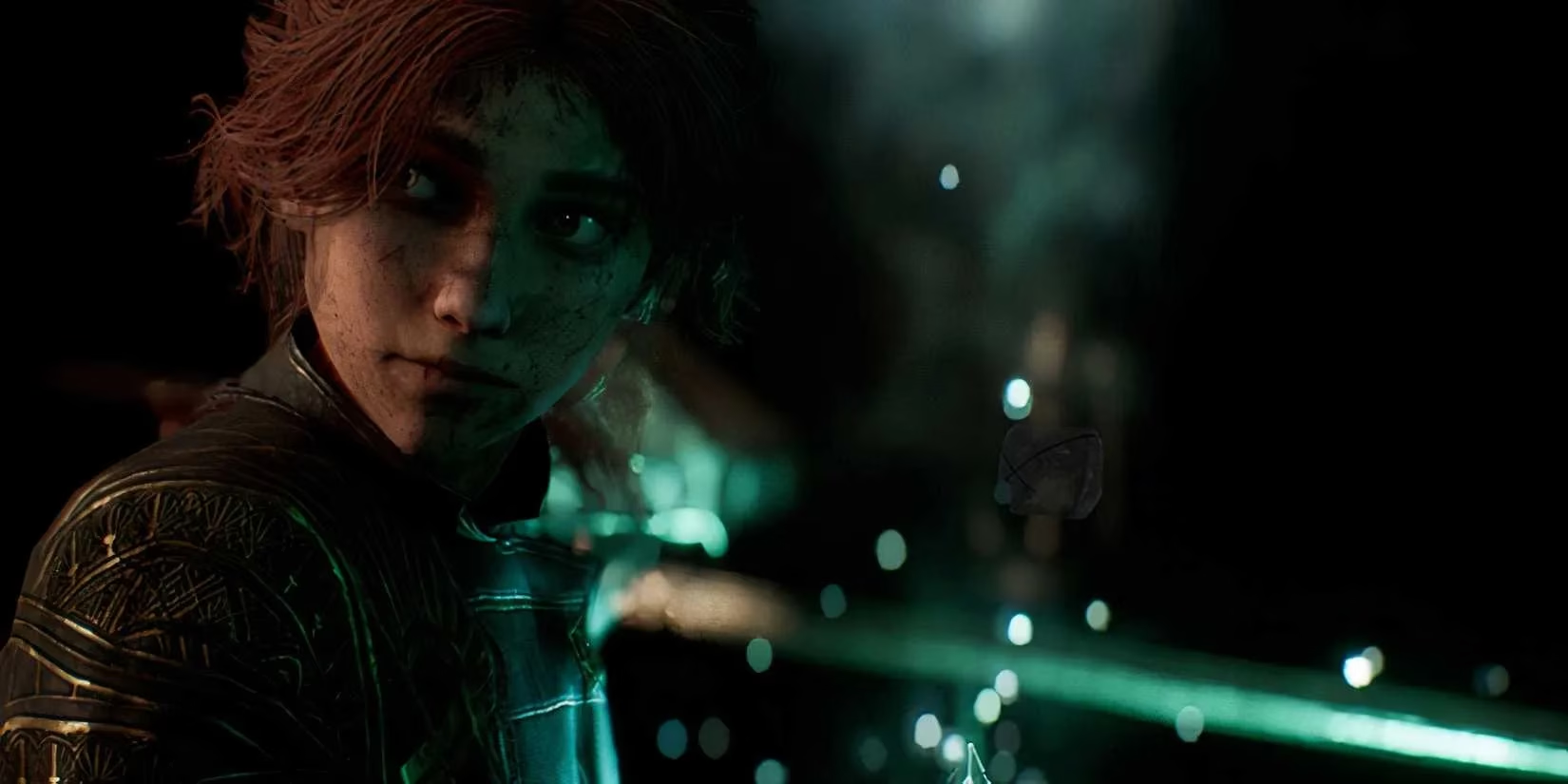
The 2025 gem Clair Obscur: Expedition 33 plays a similar mind game. You spend the entire campaign hunting The Paintress, a being who erases people by writing their age. The game gives you the classic 'point of no return' warning before the final confrontation. You win, the threat seems neutralized... and then the Epilogue title card melts into Act 3. A whole third of the game, exploring the aftermath and the true source of the curse, awaits. It’s a stunning, 'wait, there's MORE?!' moment that few see coming.
The Unmatched Legacy of a Second Region
And then, there's the granddaddy of them all, the one that set the standard and has never truly been topped: Pokémon Gold & Silver. After beating the Johto League, becoming Champion, and celebrating your victory, you think you've seen it all. But Professor Elm calls. He has a ticket for you. A boat ticket. To Kanto. The original region from Pokémon Red & Blue.
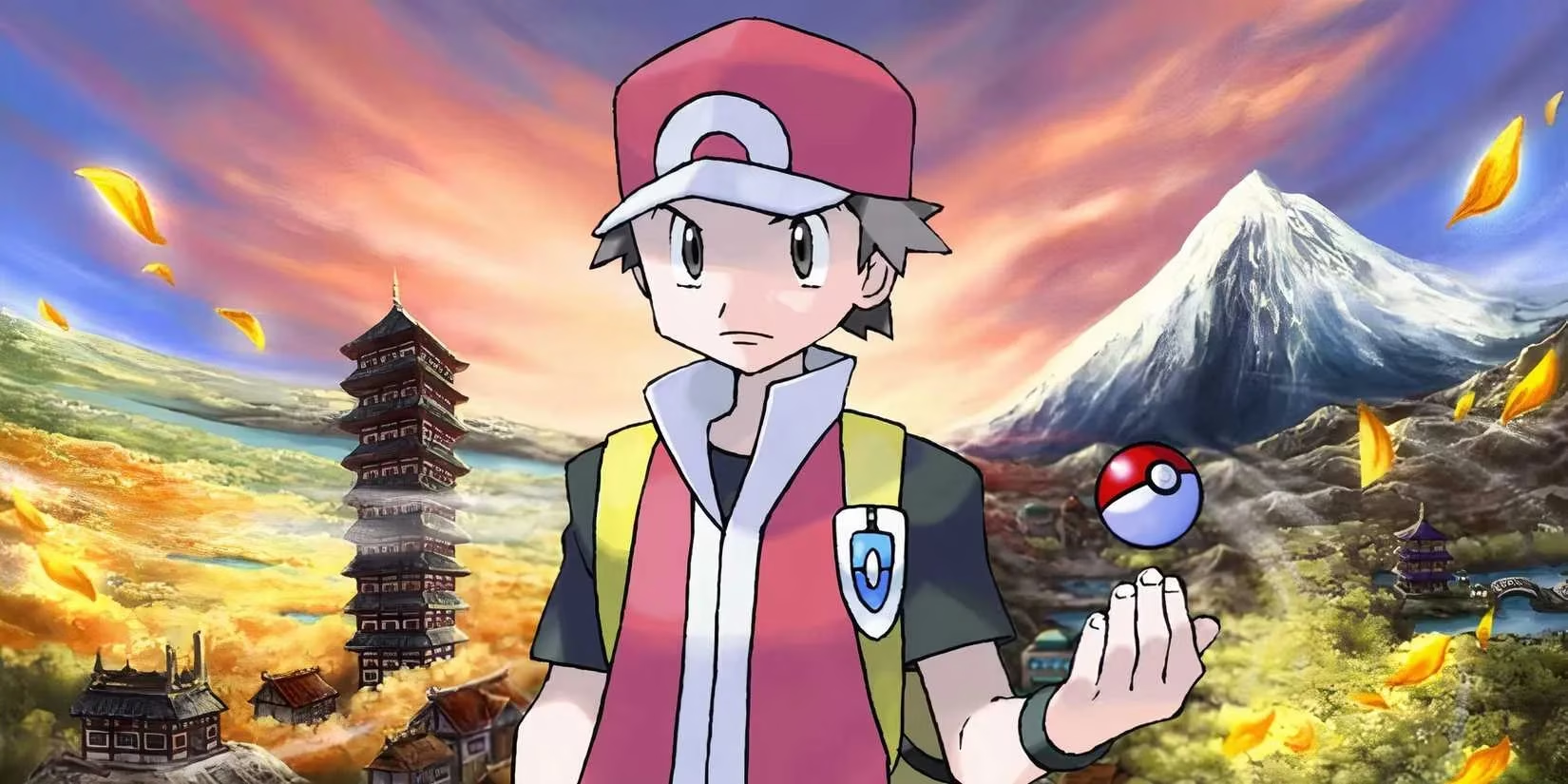
This wasn't just post-game content; this was a second full game tucked inside the cartridge. Eight more Gyms, a whole new landscape to explore, culminating in the ascent of Mt. Silver for a wordless, incredibly difficult battle against Red, the protagonist of the first games. The sheer scale of this surprise, the gift of nostalgia and new challenge combined, created a sense of wonder and scope that remains legendary. It was the ultimate 'the world is bigger than you thought' moment in gaming history.
Why These Moments Resonate
So why do these deceptive conclusions hit so hard? What's the secret sauce?
| Element | Why It Works |
|---|---|
| Subverted Expectations | It breaks the player's mental model of narrative structure. We're trained for a three-act journey. A false ending shatters that, creating disorientation and excitement. |
| Expanded Scope | It transforms the game from a contained story into an epic. The world suddenly feels deeper, richer, and more mysterious. |
| Emotional Whiplash | The relief/victory of 'beating the game' is replaced by renewed tension and curiosity. It's a powerful emotional rollercoaster. |
| Rewards Investment | It tells the player, 'Your time and skill were worth it. Here is a reward you never saw coming.' It feels earned. |
In the end, a great false ending is a act of love from the developers. It’s them refusing to let the adventure end just because convention says it should. It’s a promise that there are still wonders to discover, challenges to overcome, and stories to be told. In a medium where we often chase the finale, these games remind us that sometimes, the journey doesn't end when you think it does—it just gets a whole lot more interesting. And that, my friends, is the real 'game changer.'